The Apple smart ring doesn’t officially exist yet, but that hasn’t stopped the tech world from buzzing about it. From patent filings to analyst predictions and even an Apple-run consumer survey, the signals are hard to ignore. If you’re an Apple user, a fitness tracker, or simply someone who wants to know what’s coming next in wearable tech, this guide breaks down everything known so far: the rumors, potential features, possible pricing, and the best alternatives you can buy right now.
What We Know So Far: The Latest Apple Ring Rumors
Apple has filed multiple smart ring patents over the past several years, and that paper trail tells a story. The patents describe a wearable ring device with sensors, gesture controls, and tight integration with Apple’s broader product ecosystem, suggesting this isn’t just a passing idea inside Cupertino.
In October 2024, CCS Insight analyst Ben Wood went on record predicting a 2026 launch, positioning the Apple smart ring as a companion device to the Apple Watch rather than a replacement. Around the same time, Bloomberg’s Mark Gurman, typically the most reliable Apple insider, suggested Apple had stepped back from near-term plans, adding uncertainty to the timeline.
Perhaps the most telling signal came from a 2024 Apple survey that asked Apple Watch users directly about their interest in a smart ring. Companies don’t spend resources on consumer research for products they’ve shelved. That survey, combined with ongoing patent activity, points to active market exploration even if a launch isn’t imminent.
The current picture is mixed. Some insiders report meaningful development progress, while others note a near-complete silence on details since late 2024. What’s clear is that Apple is watching the category closely, and likely waiting for the right moment.
Possible Release Date and Pricing Expectations
No official release date exists for the Apple smart ring. Ben Wood’s 2026 prediction remains the most specific estimate on the table, but even that is speculative. Given Apple’s product development cycles and the mixed signals from insiders, a 2026 launch would require an announcement soon, which hasn’t happened as of May 2026.
A more realistic window may be 2027, leaving Apple time to refine the hardware and position it within a crowded market.
On pricing, Apple hasn’t confirmed anything, but context helps set expectations:
| Smart Ring | Price Range |
|---|---|
| Oura Ring 4 | $349 (+ $5.99/mo subscription) |
| Samsung Galaxy Ring | $299–$449 |
| Apple Smart Ring (estimated) | $299–$499 |
Apple tends to price premium wearables at the top of the market. Given that the Apple Watch Ultra 2 retails at $799, a smart ring positioned as a complementary device would likely land between $299 and $499, competitive with Samsung and Oura but unmistakably Apple in margin.
Rumored Design: What the Apple Smart Ring Might Look Like
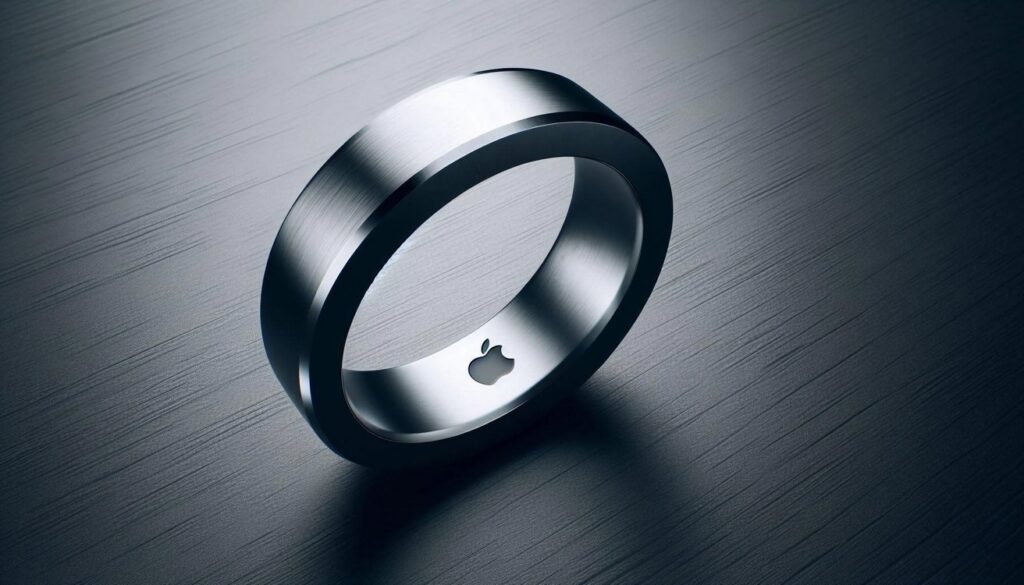
Apple’s patent filings offer the clearest window into what the Apple smart ring could look like, and it sounds anything but simple.
One recurring patent describes a rotating outer band, similar in concept to the Digital Crown on Apple Watch, that could be used for scrolling, adjusting volume, or navigating interfaces. Another patent outlines a built-in microphone to support Siri voice commands directly from the ring, no phone or watch required.
Perhaps the most interesting design detail involves skin-to-skin contact detection. The ring may be able to sense when fingers touch, translating specific gestures, like a double tap or pinch, into device commands. This builds on a gesture system Apple already introduced with Apple Watch Series 9.
In terms of form factor, expect something sleek and minimal. Apple’s design language favors clean lines and premium materials, so titanium or surgical-grade stainless steel seems likely. The ring would need to be thin enough for daily wear while housing sensors, a battery, and wireless connectivity, a serious engineering challenge Apple has been quietly working through.
Health and Fitness Features Apple Could Pack Into a Smart Ring
Health tracking is the core value proposition of every smart ring on the market, and the Apple smart ring would be no different. Based on patents and industry expectations, here’s what the device could realistically track:
- Sleep tracking – Detailed sleep stages (REM, deep, light) with actionable insights through the Health app
- Heart rate monitoring – Continuous or on-demand heart rate data
- Blood oxygen (SpO2) – Already available on Apple Watch: likely to carry over
- Skin temperature – Useful for cycle tracking and early illness detection
- Fitness and activity tracking – Step counts, calorie burn, and workout detection
One significant advantage the Apple smart ring could have over the Apple Watch is battery life. Smartwatches require frequent charging: a ring with fewer display components could realistically last 5–7 days per charge, closer to what Oura Ring 4 currently delivers.
Apple’s HealthKit framework already aggregates data from multiple devices. A smart ring feeding continuous biometric data into that system, alongside Apple Watch and iPhone sensors, would give users a richer, more complete health picture than any single device can provide today.
How the Apple Ring Could Fit Into the Apple Ecosystem
This is where the Apple smart ring gets genuinely interesting. Apple’s competitive advantage isn’t just hardware, it’s the tightly connected ecosystem around it. A smart ring from Apple wouldn’t exist in isolation: it would be designed to work with everything else you already own.
Patents point to deep integration with Apple Vision Pro, specifically for hand tracking and gesture input. Rather than relying solely on Vision Pro’s cameras to interpret hand movements, the ring could provide precise, sensor-confirmed gesture data, making spatial computing interactions more accurate and responsive.
Beyond Vision Pro, the Apple smart ring could function as a universal controller across the Apple lineup:
- iPhone & iPad – Quick gestures to dismiss notifications, skip media, or trigger shortcuts
- Mac – Scroll, click, or control presentations without touching the keyboard
- Apple TV – Navigate menus with subtle finger movements
- HomeKit devices – Control lights, locks, and thermostats with a gesture
- AirPods Max – Adjust volume or skip tracks without reaching for the phone
This controller role, more than health tracking, could be the defining use case that sets the Apple smart ring apart from every competitor currently on the market.
Top Smart Ring Alternatives to Consider Right Now
The Apple smart ring isn’t available yet. If you want a smart ring today, these are the top options worth your attention:
| Device | Best For | Price | Battery Life |
|---|---|---|---|
| Oura Ring 4 | Sleep & recovery tracking | $349 + subscription | Up to 8 days |
| Samsung Galaxy Ring | Android/Galaxy ecosystem users | $299–$449 | Up to 7 days |
| RingConn Smart Ring | Budget-conscious buyers | ~$199 | Up to 9 days |
| Ultrahuman Ring Air | Fitness-focused users | $349 | Up to 6 days |
Oura Ring 4 remains the gold standard for sleep and recovery data. Its app experience is polished and the biometric accuracy is well-regarded by health researchers.
Samsung Galaxy Ring is the strongest option if you’re already in the Samsung ecosystem, with solid health features and no subscription fee, a meaningful differentiator.
RingConn and Ultrahuman Ring Air offer capable tracking at more accessible price points, making them worth considering if you want to test the smart ring format before the Apple version arrives.
None of these integrate with iPhone or Apple Health as deeply as an Apple-made ring would, but they’re solid, proven devices available right now.
Conclusion
The Apple smart ring is still a rumor, but it’s a well-supported one. Patent filings, consumer surveys, and analyst predictions all point toward a product Apple is actively exploring. When it does arrive, it won’t just be a health tracker: it’ll be a new input device built for the full Apple ecosystem. Until then, Oura Ring 4 and Samsung Galaxy Ring are your best real-world options.
Frequently Asked Questions About the Apple Smart Ring
When will the Apple smart ring be released?
No official release date has been announced. Analyst Ben Wood predicted a 2026 launch, but as of May 2026, Apple hasn’t confirmed this. A more realistic timeline may be 2027, allowing Apple time to refine the hardware and position the device competitively.
What features could an Apple smart ring have?
Based on patent filings, the Apple smart ring could include sleep tracking, heart rate monitoring, blood oxygen measurement, skin temperature sensing, and fitness tracking. Patents also suggest gesture controls, a rotating band for navigation, and Siri voice command integration directly from the ring.
How much will the Apple smart ring cost?
Apple hasn’t confirmed pricing, but estimates suggest $299–$499, competitive with Samsung Galaxy Ring and Oura Ring 4. This aligns with Apple’s premium positioning and development costs for a health-focused wearable.
How does the Apple smart ring differ from Apple Watch?
The Apple smart ring is positioned as a companion device, not a replacement. It could offer extended battery life (5–7 days) compared to Apple Watch, plus unique gesture controls and Vision Pro integration. Together, they’d provide deeper health insights through HealthKit aggregation.
Will the Apple smart ring work with iPhone and other Apple devices?
Yes. Patents indicate deep ecosystem integration with iPhone, iPad, Mac, Apple Vision Pro, Apple TV, HomeKit, and AirPods Max. The ring could function as a universal controller across all Apple devices, enabling gestures to control notifications, media, and smart home features.
What are the best smart ring alternatives available now?
Top options include Oura Ring 4 for sleep tracking ($349 + subscription, 8-day battery), Samsung Galaxy Ring for Android users ($299–$449, 7-day battery), and RingConn Smart Ring for budget-conscious buyers (~$199, 9-day battery). All offer solid health tracking until Apple’s version launches.