
Smart glasses have come a long way, and the RayBan Meta Gen 2 might be the clearest proof. Starting at $379, these AI-enabled frames double the battery life of their predecessor, bump video to 3K resolution, and run Meta’s LLAMA 4-powered assistant entirely hands-free. If you’re a Gen 1 owner wondering whether the upgrade is worth it, or a first-time buyer deciding whether smart glasses deserve a spot in your life, this review cuts through the noise with real-world results, precise specs, and honest trade-offs.
Design, Styles, and Pricing
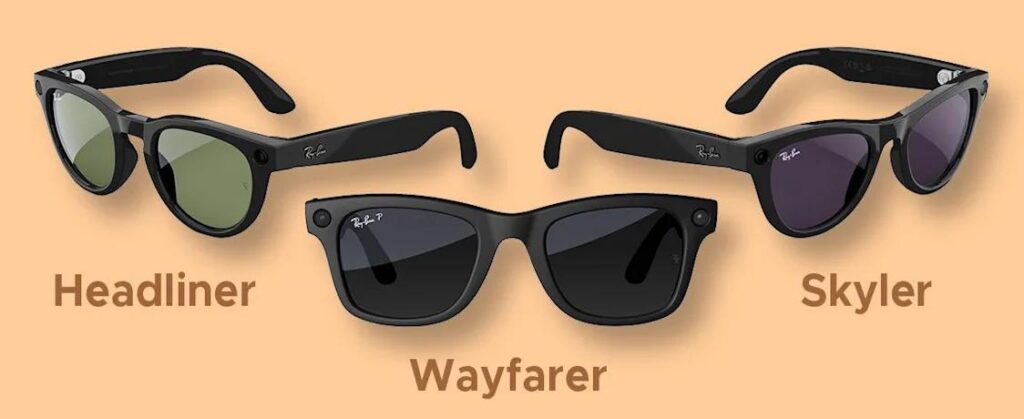
The RayBan Meta Gen 2 arrives in three frame styles, Wayfarer, Headliner, and Skyler, spanning approximately 27 combinations of frame color, lens type, and finish. The silhouette is nearly identical to Gen 1, which is either a strength or a missed opportunity depending on your perspective. For most people, it’s a strength: these glasses look like regular Ray-Bans, not gadgets.
Pricing breaks down like this:
| Lens Type | Starting Price |
|---|---|
| Standard | $379 |
| Polarized | ~$409 |
| Transitions | ~$459 |
Buying directly from Ray-Ban unlocks exclusive Transitions colors like Amethyst and Ruby, plus Sapphire Polarized options, Dark Brown extra-thin lenses for stronger prescriptions, and an optimized anti-reflective layer. Prescription buyers can choose Single Vision or Progressive in Slim, Thin, or Extra Thin. Available across the US, Canada, most of Europe, and Australia, the RayBan Meta Gen 2 is genuinely accessible, not a limited-market experiment.
The glasses weigh roughly 52 grams, only marginally heavier than Gen 1 and comparable to standard sunglasses. You won’t feel the extra hardware after an hour of wear.
Battery Life and Everyday Wearability
Longer battery is the single most impactful upgrade in the RayBan Meta Gen 2. The Gen 1 maxed out at 4 hours, and rarely hit that ceiling in real use. Gen 2 claims up to 8 hours per charge on typical use, backed by a 42% increase in battery capacity.
Here’s how those numbers translate in practice:
| Use Case | Estimated Runtime |
|---|---|
| Light use (occasional photos/AI queries) | ~12.5 hours |
| Continuous music playback | ~5 hours |
| Voice calling | ~5.3 hours |
| Heavy use (3K video + AI + streaming) | ~4–5 hours |
| Total with case charges | ~48 hours |
Internal testing across reviewers confirms: heavy nonstop use, music streaming, frequent 3K video clips, and back-to-back Meta AI commands burn through about 20% per hour. That aligns closely with Meta’s 5-hour estimate for active use. For a full day commute or travel day with lighter interaction, you’re well within the 8-hour claim.
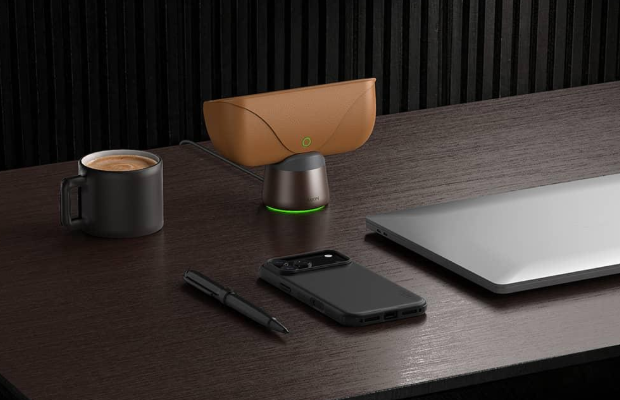
The charging case extends the total to 48 hours of standby charge, so multi-day trips don’t require hunting for outlets. Onboard storage holds 32GB, roughly 500 photos or 100 thirty-second video clips. The RayBan Meta Gen 2 is genuinely built for all-day wear.
Audio Quality and Meta AI Performance
The open-ear speakers in the RayBan Meta Gen 2 are noticeably louder than Gen 1, with more bass presence and less sound bleed to people nearby. That second point matters, wearing AI glasses on a crowded subway or in an office is less socially awkward when your audio isn’t leaking into the space around you.
The five-microphone array handles calls and voice commands cleanly. Background noise gets filtered well enough that callers rarely ask you to repeat yourself, even outdoors.
Where the AI Assistant Shines and Falls Short
Meta’s LLAMA 4-powered assistant responds to “Hey Meta” entirely hands-free. No phone unlock, no screen tap.
Where it shines:
- Hands-free messaging, reminders, and calendar checks
- Real-time scene description, point your eyes at an object, ask what it is
- Live translation across multiple languages including German and Portuguese, with offline modes in development
- Playlist control, song requests, and quick information lookups during workouts or walks
Where it falls short:
- Complex, multi-step tasks are limited compared to desktop or mobile LLMs
- Visual identification occasionally returns inconsistent or wrong answers, one reviewer asked the same flower identification question three times and got three different species
- Full performance depends on a network connection: offline capability is still narrow
The Meta AI on the RayBan Meta Gen 2 is most useful when you treat it like a smart assistant for quick, single-step queries, not a research tool.
Camera Upgrades: 3K Video, Stabilization, and More
The RayBan Meta Gen 2 uses a 12MP ultra-wide sensor that captures stills at 3024 × 4032 pixels in portrait orientation. Video jumps to 3K at 30 fps, with additional modes at 1440p/30 and 1200p/60, each capped at 3 minutes per clip.
| Capture Mode | Resolution | Max Duration |
|---|---|---|
| Photo | 12MP (3024×4032) | , |
| Video (3K) | 2880×2160 @ 30fps | 3 min |
| Video (1440p) | 2560×1440 @ 30fps | 3 min |
| Video (1200p) | 2133×1200 @ 60fps | 3 min |
The jump from Gen 1’s video ceiling to 3K is meaningful for first-person lifestyle content, the kind of candid POV footage that performs well on Instagram Reels and TikTok. Stabilization has improved enough that walking shots look watchable without post-processing. For users interested in improving their mobile and digital photography workflow, AI-powered editing tools are also changing how people enhance images after capture.
But, it’s worth being direct: the 12MP ultra-wide camera hasn’t changed in optical hardware since Gen 1. The gains come from processing and resolution ceiling, not a new physical sensor. For casual capture and social sharing, the RayBan Meta Gen 2 camera more than delivers. For photographers expecting DSLR-tier output from sunglasses, the expectations need recalibrating.
Software updates confirmed for late 2025 will add slow-motion, hyperlapse, and single-word capture commands like “Photo.” These are real additions, not vaporware, Meta’s 2025 release notes already show 8 feature updates delivered.
How It Stacks Up Against the Competition
The RayBan Meta Gen 2 sits in a category where direct rivals are few but worth comparing carefully.
| Product | Price | Battery | Display | Camera | Weight |
|---|---|---|---|---|---|
| RayBan Meta Gen 2 | $379 | 8 hrs | None | 12MP, 3K | ~52g |
| Oakley Meta Vanguard | ~$499 | ~9 hrs | None | 12MP, 3K | Heavier |
| Ray-Ban Meta Display | ~$750+ | Similar | HUD | 12MP | Notably heavier |
Oakley Meta Vanguard: Shares the same camera and battery architecture, adds IP67 water resistance, louder speakers, and an extra hour of battery. But it doesn’t blend in as naturally in social settings, offers no Transitions or prescription options, and costs $120 more. For style-conscious buyers, the RayBan Meta Gen 2 wins on everyday wearability.
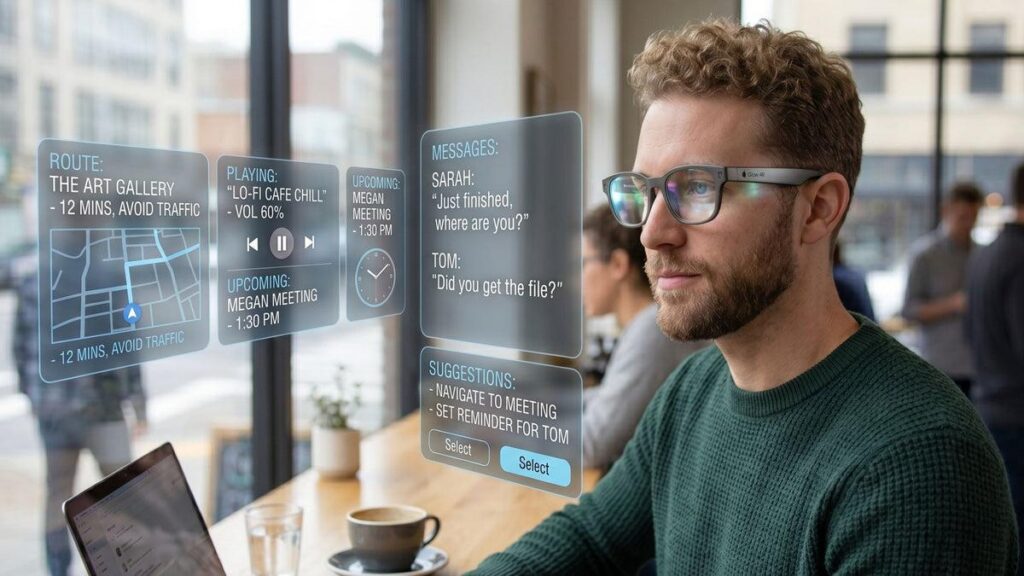
Ray-Ban Meta Display glasses: Pay roughly double and you get a built-in HUD for navigation, video playback, and message reading, plus a neural band for gesture controls. The trade-off is a noticeably thicker frame, limited style options (one style, two colors), restricted stock, and significantly more weight. If you specifically need a display, it’s worth it. Otherwise, the Gen 2 is the smarter daily driver.
EssilorLuxottica, the Oakley and Ray-Ban parent company, is on track to produce 10 million units next year to meet demand, a signal that AI glasses have crossed from novelty to mainstream product category.
Should You Buy the RayBan Meta Gen 2?
The RayBan Meta Gen 2 earns CNET’s Editors’ Choice for 2025, and the reasoning is straightforward. Doubling battery life while keeping the same weight and classic Ray-Ban silhouette solves the Gen 1’s single biggest frustration. Everything else, 3K video, better audio, hands-free AI, layers on top of a foundation that now actually lasts through a full day.
Buy the RayBan Meta Gen 2 if you:
- Are a Gen 1 owner frustrated by battery dying mid-outing
- Want hands-free 3K POV capture for travel, workouts, or content creation
- Need discreet AI assistance and music without visible earbuds
- Wear Ray-Ban styles regularly and want one less device to carry
Consider alternatives if you:
- Need a visual AR display for navigation, gaming, or productivity apps
- Are waiting for Samsung or Apple smart glasses to enter the market
- Can hold out for potential sale pricing, trackers show the RayBan Meta Gen 2 dropping to $283–$330 during major retail events
At $379, the RayBan Meta Gen 2 is $80 more than the still-available Gen 1 at $299. That $80 buys you roughly double the usable daily battery, 3K video, and a cleaner AI experience. For most buyers, that math works. If you’re undecided, the software roadmap alone, slow-motion, Garmin integration, hyperlapse arriving by end of 2025, suggests the glasses will only improve on the hardware you’re already buying.
No other display-free smart glasses balance AI capability, camera quality, audio performance, and social acceptability as well as the RayBan Meta Gen 2 does right now.