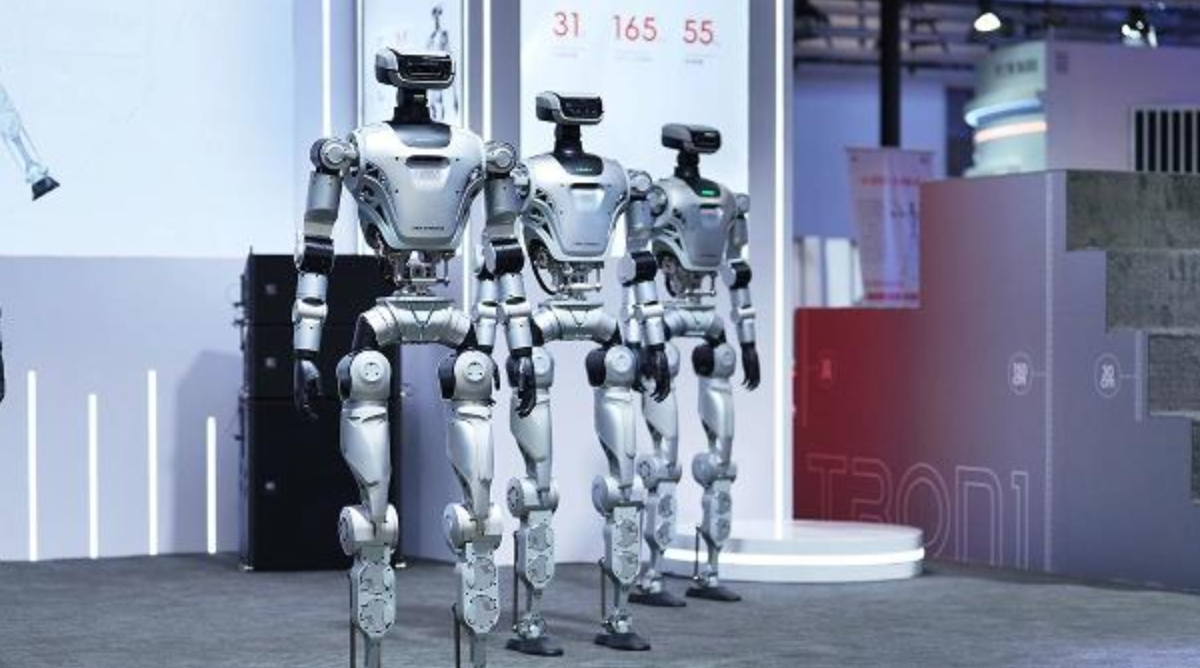
Multi-robot synchronization works by making several robots share time, position, task status, and control signals so they act like one coordinated system instead of separate machines. In practice, synchronization combines communication networks, scheduling logic, motion planning, and feedback control to keep every robot aligned with the same production goal. A controller may assign jobs centrally, or robots may negotiate tasks among themselves while still following common timing rules. Accurate synchronization matters in assembly, packaging, warehousing, inspection, and mobile robotics because small delays can create collisions, idle time, or inconsistent results. When designed properly, synchronized robots divide labor efficiently, maintain safe spacing, and complete complex sequences with predictable timing, repeatable motion, and higher throughput than isolated robots operating independently.
How Does Multi-Robot Synchronization Work?
Robot Communication and Centralized Control Systems
Robot communication is the foundation of synchronization. Each robot exchanges commands, status updates, position data, and timing signals through an industrial network or other low-latency connection. In a centralized control system, one controller maintains a global view of the cell and tells every robot when to start, stop, move, or hand off a part. This approach simplifies coordination because the controller can sequence actions, enforce safety zones, and prevent conflicting motions before they happen. It also makes monitoring easier, since operators can track the full system from one point. For tightly timed applications such as machine tending or cooperative assembly, centralized control helps keep interactive humanoid robot actions aligned and cycle times consistent.
Distributed Coordination and Task Allocation
Distributed coordination takes a different approach. Instead of relying on one controller for every decision, each robot uses local data and shared rules to coordinate with the rest of the group. Robots can announce availability, estimate travel time, and claim tasks based on workload, location, or capability. This task allocation method supports flexible operations because the system can continue working even if one robot changes state or becomes unavailable. Distributed synchronization is especially useful in fleets of mobile robots, warehouse transport, and large workspaces where conditions change often. To remain synchronized, robots still need agreed timing references, communication protocols, collision avoidance logic, and clear priority rules so independent decisions produce orderly group behavior.
Key Technologies Behind Synchronized Robot Movements
Time Synchronization, Motion Planning, and Control Algorithms
Synchronized movement depends on robots sharing a precise clock and following coordinated trajectories. Time synchronization keeps command execution aligned across controllers, drives, and sensors so motions begin and end at the correct instant. Motion planning then generates paths that respect workspace limits, payload constraints, tool orientation, and safe separation distances between robots. Control algorithms convert those plans into smooth velocity, acceleration, and torque commands while correcting for small disturbances. In cooperative handling, for example, two robots must match speed and position closely to avoid twisting the part. Advanced controllers also coordinate path blending, waypoint timing, and interlocks, allowing multiple robots to move simultaneously without interference while preserving accuracy, repeatability, and predictable cycle performance.
Sensor Feedback, Data Exchange, and Real-Time Coordination
Sensor feedback lets synchronized robots adapt while they work. Encoders confirm joint positions, force sensors detect contact, vision systems track parts, and proximity sensors help maintain spacing. That data is exchanged in real time so each robot knows whether the shared process remains on schedule. If one robot arrives late, detects an obstruction, or measures unexpected force, the control system can slow another robot, pause a handoff, or replan the sequence before an error escalates. Reliable data exchange also supports event-based coordination, where robots act when a condition is met rather than after a fixed delay. This improves robustness in dynamic environments and helps synchronized systems maintain accuracy, safety, and throughput under changing operating conditions.
How to Implement Reliable Multi-Robot Synchronization
Step-by-Step Setup: From Robot Configuration to Execution
Implementing reliable synchronization starts with defining the shared task, robot roles, workspace boundaries, and success criteria. Next, configure communication links, common timing references, safety zones, and I/O mapping so all devices exchange consistent signals. Then calibrate robot frames, tools, payload data, and sensors to ensure motion commands are interpreted correctly across the system. After that, build the coordination logic: task sequencing, interlocks, handoff conditions, collision rules, and recovery behavior. Validate trajectories in simulation first, then test them at reduced speed on the actual cell. During commissioning, measure latency, timing drift, and path accuracy, and tune control parameters as needed. Once performance is stable, execute production runs while continuously monitoring logs, alarms, and cycle data.
Common Synchronization Challenges and How to Solve Them
The most common synchronization problems are network latency, clock drift, calibration errors, sensor noise, and poor recovery logic. Latency can desynchronize robot actions, so use deterministic communication, prioritize control traffic, and reduce unnecessary data loads. Clock drift causes timing mismatches, which are solved by maintaining a shared time source and checking synchronization health regularly. Calibration mistakes create positional offsets that disrupt handoffs, so verify frames and tools after installation and maintenance. Sensor noise can trigger false events, making filtering and signal validation essential. Another frequent issue is deadlock, where robots wait on each other indefinitely. Clear priority rules, timeout handling, fallback states, and tested restart procedures keep synchronized cells safe, productive, and recoverable.

Conclusion
Multi-robot synchronization works by combining communication, shared timing, coordinated planning, and continuous feedback so several robots can perform one process safely and efficiently. Centralized systems manage actions from a single control point, while distributed systems let robots coordinate locally under common rules. Both methods rely on accurate clocks, reliable data exchange, motion control, and well-defined task logic. Successful implementation also depends on careful calibration, simulation, safety design, and recovery planning. When those elements are in place, synchronized robots can share loads, hand off parts smoothly, avoid collisions, and maintain stable cycle times. For manufacturers and automation teams, the result is a robotic system that behaves predictably under real operating conditions and delivers scalable, repeatable performance across complex workflows.