The best video game soundtracks do more than fill silence, they shape how we remember entire worlds. From orchestral fanfares that swell across Hyrule Field to a single acoustic guitar haunting a post-apocalyptic Boston, these scores have become cultural touchstones for gamers, composers, and music fans alike.
We’ve ranked 15 of the most iconic, emotionally charged, and sonically inventive game scores ever recorded (with this article covering the top 9 essentials). Whether you’re a content creator hunting for inspiration, a music student studying composition, or just someone who still gets chills hearing the Halo theme, this list spotlights the music that turned gaming into a serious art form. Expect chiptune leitmotifs, Gregorian chants, choral metal, minimalist folk, and a few orchestral surprises that prove video game music belongs right alongside film scores.
1. The Legend of Zelda: Ocarina of Time – The Blueprint for Orchestral Adventure
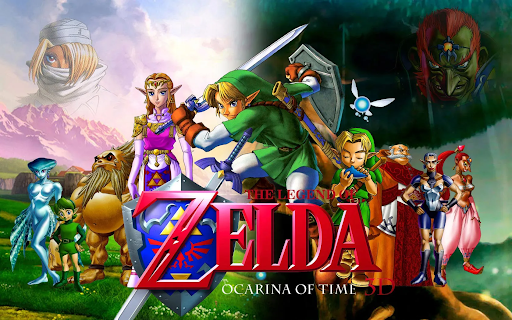
Released in 1998 for the Nintendo 64, Ocarina of Time set the template for what adventure music in games could be. Composer Koji Kondo wrote roughly 82 tracks on hardware that allowed only a handful of simultaneous notes, and somehow made it feel symphonic.
The “Hyrule Field” theme alone cycles through more than 10 musical variations based on Link’s actions, an early example of dynamic, reactive scoring. Then there’s the ocarina mechanic itself: players physically perform melodies like “Zelda’s Lullaby” and “Song of Storms” to solve puzzles, fusing gameplay and music in a way no game had attempted before.
| Detail | Spec |
|---|---|
| Composer | Koji Kondo |
| Year | 1998 |
| Tracks | ~82 |
| Standout | “Hyrule Field,” “Gerudo Valley” |
It routinely tops polls for the best video game soundtracks because it didn’t just accompany an adventure, it taught a generation what adventure sounds like.
2. Final Fantasy VII – Nobuo Uematsu’s Emotional Masterpiece
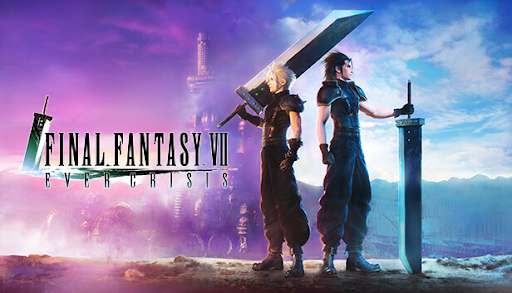
If Kondo built the blueprint, Nobuo Uematsu painted the cathedral. Final Fantasy VII (1997) packs 85 original compositions across three discs, ranging from the wistful “Aerith’s Theme” to the militaristic “Those Who Fight Further.”
Uematsu wrote much of the score on a home keyboard, yet the emotional range rivals any film composer of the era. “Aerith’s Theme,” played during the game’s most devastating moment, is a four-note piano motif that fans still cover on YouTube three decades later, the official Square Enix uploads alone have racked up tens of millions of views.
For anyone building a list of the best video game soundtracks, FFVII isn’t optional. It’s the gateway drug.
Why “One-Winged Angel” Still Echoes Through Pop Culture
“One-Winged Angel” was the first Final Fantasy track to feature live choral vocals, with Latin lyrics adapted from Carmina Burana. It’s been performed by orchestras in over 30 countries, sampled in Kingdom Hearts, and remixed for Super Smash Bros. Ultimate. The Sephiroth motif, that ominous descending choral phrase, has become shorthand for “final boss energy” across the entire medium.
3. Journey – Austin Wintory’s Oscar-Worthy Sonic Pilgrimage
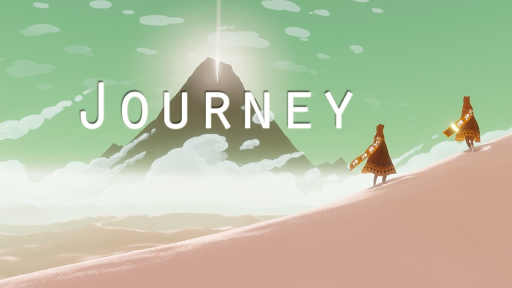
In 2013, Austin Wintory’s score for Journey became the first video game soundtrack ever nominated for a Grammy (Best Score Soundtrack for Visual Media). It lost to The Girl with the Dragon Tattoo, but the nomination cracked open a door the industry had been knocking on for years.
Wintory built the score around a solo cello performed by Tina Guo, weaving strings and wordless vocals into roughly 58 minutes of music that mirrors the player’s emotional arc through the desert. There’s no dialogue in Journey. The music is the narrative.
What makes it remarkable: the score is interactive. Themes evolve based on where you walk, who you meet, and how long you linger. Wintory called it “a single, evolving cello concerto,” and that description still captures why it’s one of the best video game soundtracks for late-night listening or creative work.
4. NieR: Automata – Haunting Vocals Meet Existential Storytelling
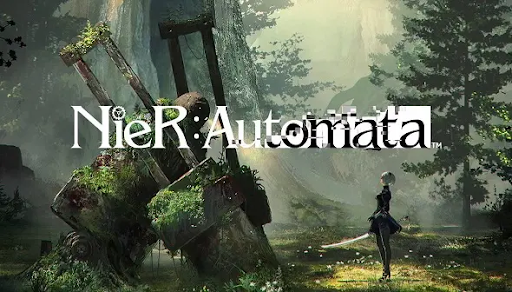
NieR: Automata (2017) sounds like nothing else in gaming. Composers Keiichi Okabe and the MONACA team built a score sung in a fictional language, a blend of invented phonemes performed primarily by vocalist Emi Evans, that mirrors the game’s themes of identity, machinery, and meaning.
The standout track, “Weight of the World,” plays during the game’s true ending and asks the player to literally sacrifice their save file. It’s one of the few moments in any medium where music, gameplay, and narrative converge into something genuinely transcendent.
Key tracks worth your queue:
- “Weight of the World”, the emotional gut-punch finale
- “Amusement Park”, eerie waltz over robotic carnage
- “A Beautiful Song”, operatic boss theme with soprano vocals
If you want a soundtrack that doubles as philosophy, this is it.
5. Hades – Darren Korb’s Modern Mythological Rock Anthem
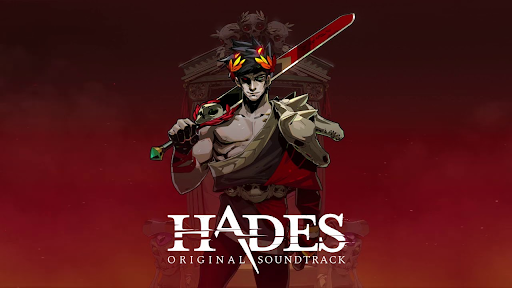
Supergiant Games composer Darren Korb describes the Hades (2020) sound as “Greek myth meets rock band warming up in a garage,” and that’s exactly what you get. Electric guitars, bouzouki, and Korb’s own vocals fuse into a score that’s as replayable as the roguelike gameplay it underscores.
“Good Riddance,” performed by Korb and Ashley Barrett, became a breakout hit, its acoustic farewell ballad has over 25 million streams across major platforms. Tracks like “In the Blood” and “Out of Tartarus” turn dungeon runs into mythological concerts.
| Track | Style | Mood |
|---|---|---|
| Good Riddance | Acoustic ballad | Bittersweet |
| In the Blood | Vocal rock | Triumphant |
| Out of Tartarus | Instrumental rock | Driving |
Hades proves that one of the best video game soundtracks of the modern era can come from a five-person audio team and a clear creative vision.
6. Undertale – Toby Fox’s Chiptune Symphony of Leitmotifs
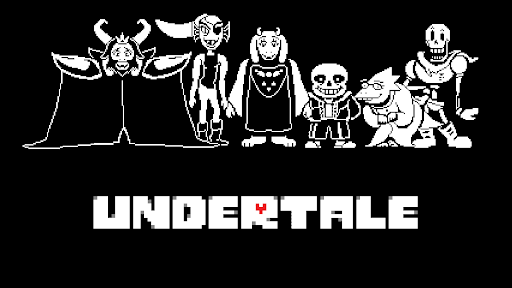
Toby Fox composed all 101 tracks of Undertale (2015) himself, mostly in FL Studio, and built the entire score around recurring leitmotifs. Nearly every melody you hear early on returns later in transformed, often heartbreaking form. It’s Wagnerian songwriting done in 8-bit.
“Megalovania,” the climactic battle theme, became a genuine internet phenomenon, covered by metal bands, classical pianists, and even performed at gaming concerts worldwide. The track has been streamed over 200 million times across platforms.
What makes Undertale special isn’t fidelity, it’s craft. Fox uses the same six or seven core motifs to score joy, dread, comedy, and grief. For composition students, it’s a masterclass in how much emotional mileage you can pull from limited material, earning its place among the best video game soundtracks of the indie era.
7. The Last of Us – Gustavo Santaolalla’s Minimalist Heartbreak
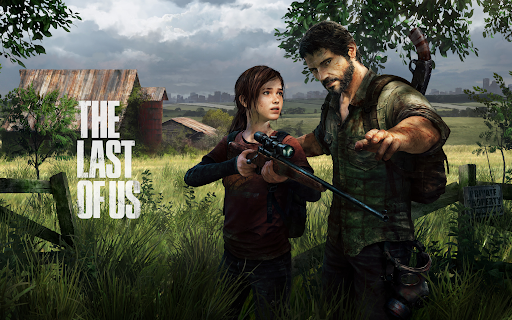
Two-time Oscar winner Gustavo Santaolalla (Brokeback Mountain, Babel) brought film-grade restraint to The Last of Us (2013). The main theme is built around a ronroco, an Andean stringed instrument, and barely any of the score uses more than three or four instruments at once.
That minimalism is the point. In a post-apocalyptic world where silence equals survival, Santaolalla’s spare acoustic guitar lines feel like grief itself. The track “All Gone (No Escape)” runs just under three minutes and contains maybe 20 distinct notes, yet it consistently appears on lists of the most emotional music in any medium.
For content creators, this score is gold for documentary-style edits, somber montages, or anything needing weight without bombast. It’s proof that one of the best video game soundtracks can whisper louder than most scores shout.
8. Halo: Combat Evolved – The Iconic Gregorian Chant That Changed Shooters
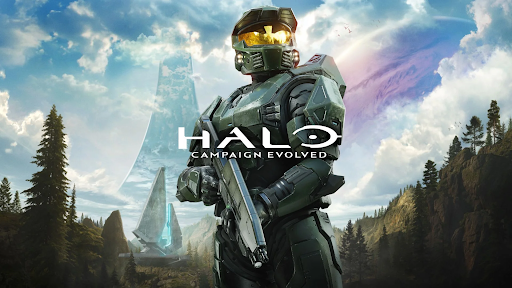
Martin O’Donnell and Michael Salvatori reportedly wrote the main Halo theme in three days back in 2001. The result: a Gregorian chant intro that became the most recognizable musical signature in console gaming history.
Before Halo, military shooters leaned on synthy action loops or licensed rock. O’Donnell’s choice to open with monastic male vocals over tribal drums turned Master Chief’s adventure into something mythic, closer to Lord of the Rings than Doom. The franchise has since sold over 81 million copies, and the theme remains its strongest brand asset.
Why it still matters:
- First mainstream shooter to use choral vocals as a primary motif
- Inspired scores for Destiny, Mass Effect, and countless imitators
- Performed by full orchestras at Video Games Live since 2005
It didn’t just score a game. It scored a genre shift.
9. Red Dead Redemption 2 – A Cinematic Western Score for the Ages
Woody Jackson spent over seven years crafting the score for Red Dead Redemption 2 (2018), recording with a 60-piece orchestra plus vintage Western instruments like dobros, fiddles, and 1930s harmoniums. The result is 192 tracks across the official soundtrack release, one of the largest scores ever produced for a video game.
What sets it apart is its dynamic system. The music adapts in real time to your actions: a peaceful ride through Lemoyne might suddenly bloom into a brass-and-strings swell when a stranger appears on the horizon. Rockstar also commissioned original songs from D’Angelo, Willie Nelson, and Rhiannon Giddens for key narrative beats.
| Stat | Number |
|---|---|
| Composer | Woody Jackson |
| Production time | 7+ years |
| Tracks | 192 |
| Live musicians | 60+ |
Few of the best video game soundtracks rival its scope, or its ability to make a horse ride feel like a John Ford film.
Honorable Mentions: 6 More Soundtracks Worth Your Playlist
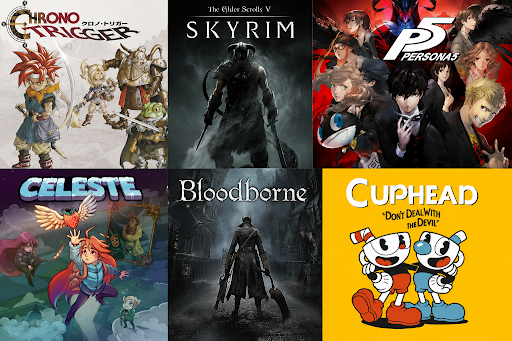
Our top 9 only scratches the surface. To round out the 15 best video game soundtracks, here are six more scores every gamer and music fan should hear at least once.
| # | Game | Composer | Year | Why It Matters |
|---|---|---|---|---|
| 10 | Chrono Trigger | Yasunori Mitsuda | 1995 | Time-travel themes that span eras and emotions |
| 11 | Skyrim | Jeremy Soule | 2011 | “Dragonborn” choir performed by 30 male vocalists |
| 12 | Persona 5 | Shoji Meguro | 2017 | Acid jazz meets J-pop heist energy |
| 13 | Celeste | Lena Raine | 2018 | Synth-driven anxiety turned into triumph |
| 14 | Bloodborne | Tsukasa Saitoh & team | 2015 | Gothic horror with 65-piece orchestra and choir |
| 15 | Cuphead | Kristofer Maddigan | 2017 | Authentic 1930s big-band jazz, fully live-recorded |
Each of these scores expands what game music can do, whether through genre experiments, live performance, or sheer emotional precision.
What Makes a Game Soundtrack Truly Great?
After studying the best video game soundtracks for this list, a few patterns stand out. Great game music isn’t just well-composed, it’s built for interaction.
Three traits separate iconic scores from forgettable ones:
- Adaptive structure. Scores like RDR2 and Journey shift in real time based on player choices. The music reacts, not just plays.
- Strong leitmotifs. Undertale and Final Fantasy VII use recurring melodies that gain emotional weight through repetition and variation.
- Restraint. The Last of Us proves that knowing when not to play music is as important as the notes themselves.
For content creators and composition students, these principles translate beyond gaming. They’re the same tools film composers, podcast producers, and even TikTok editors use to make sound feel inevitable. Study these scores like sheet music, because in many ways, that’s exactly what they are.
Experiencing these details fully also depends on your audio setup. A good pair of gaming headsets can reveal spatial depth, subtle layering, and dynamic transitions that standard speakers often miss. This is especially noticeable in adaptive scores like those in Red Dead Redemption 2 and Journey, where the music shifts in real time based on player actions.
Final Thoughts
The best video game soundtracks have evolved from chiptune novelties into a legitimate art form influencing film, concert halls, and streaming charts. From Kondo’s ocarina melodies to Jackson’s seven-year Western opus, these scores prove that interactivity doesn’t dilute musical craft, it expands it. Queue them up, study them, sample them, or just let them play while you work. Either way, you’re hearing some of the most inventive composition of the last 30 years.
Frequently Asked Questions About the Best Video Game Soundtracks
1. What makes the best video game soundtracks different from film scores?
Ans. Game composers write modular, loopable cues that adapt to unpredictable player behavior, unlike film scores which are linear and fixed to picture. Game music functions as themed building blocks rather than a single narrative arc, requiring composers to design for interactivity.
2. Why is The Legend of Zelda: Ocarina of Time considered one of the best video game soundtracks?
Ans. Composer Koji Kondo created roughly 82 dynamic tracks on limited hardware, with the ‘Hyrule Field’ theme cycling through 10+ variations based on Link’s actions. The ocarina mechanic fused gameplay and music innovatively, setting the orchestral adventure template for gaming.
3. How has video game music changed since winning Grammy recognition?
Ans. Since 2011, game soundtracks became eligible for Grammy’s ‘Best Score Soundtrack for Visual Media’ category, officially added in 2023. This legitimized gaming as a serious art form, with titles like Journey (2013) earning nominations and Assassin’s Creed Valhalla: Dawn of Ragnarök winning the inaugural game-specific Grammy in 2024.
4. Which video game soundtrack is best for studying and focus work?
Ans. Journey, The Last of Us, and Celeste’s B-sides are ideal for background work. Their minimal vocals and steady tempos maintain focus without distraction, making them popular choices for content creators and students needing concentration-friendly music.
5. Can I legally use video game soundtracks in my YouTube videos?
Ans. Most game scores are copyrighted and trigger Content ID claims. However, some composers like Darren Korb (Hades) and Lena Raine (Celeste) offer creator-friendly licensing. Always check the publisher’s policy before uploading to avoid copyright strikes.
6. What are the three key traits that separate great video game soundtracks from forgettable ones?
Ans. Adaptive structure (music reacting to player choices), strong leitmotifs (recurring melodies gaining emotional weight), and strategic restraint (knowing when not to play music). Games like Journey, Undertale, and The Last of Us exemplify these principles.