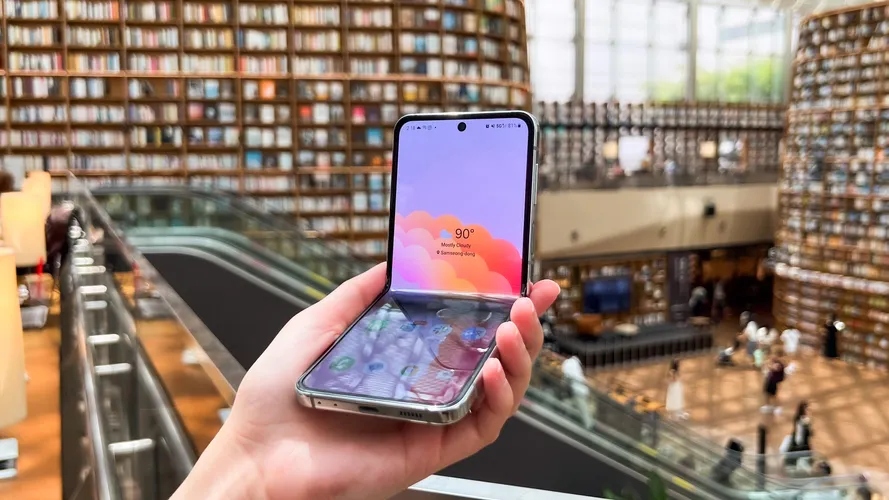
The best foldable phone in 2026 is no longer a novelty, it’s a serious upgrade over traditional slabs. Hinges are tighter, creases are fainter, and software has finally caught up with the hardware. Whether you want a book-style powerhouse for multitasking or a compact flip phone that fits in any pocket, the options have never been stronger.
This list covers seven of the best foldable phones available right now, ranked by real-world use cases: productivity, camera quality, portability, AI features, value, and display innovation. Each pick is matched to a specific type of buyer, so you can skip straight to what matters for your needs.
| Phone | Form Factor | Best For |
|---|---|---|
| Samsung Galaxy Z Fold 7 | Book-style | Productivity & overall performance |
| Google Pixel 10 Pro Fold | Book-style | AI features & cameras |
| Samsung Galaxy Z Flip 7 | Flip | Style & portability |
| Motorola Razr Ultra 2025 | Flip | Cover screen experience |
| OnePlus Open 2 | Book-style | Value for power users |
| Oppo Find N5 | Book-style | Ultra-slim design |
| Huawei Mate X7 | Book-style | Display innovation |
1. Samsung Galaxy Z Fold 7 – Best Overall Foldable Phone
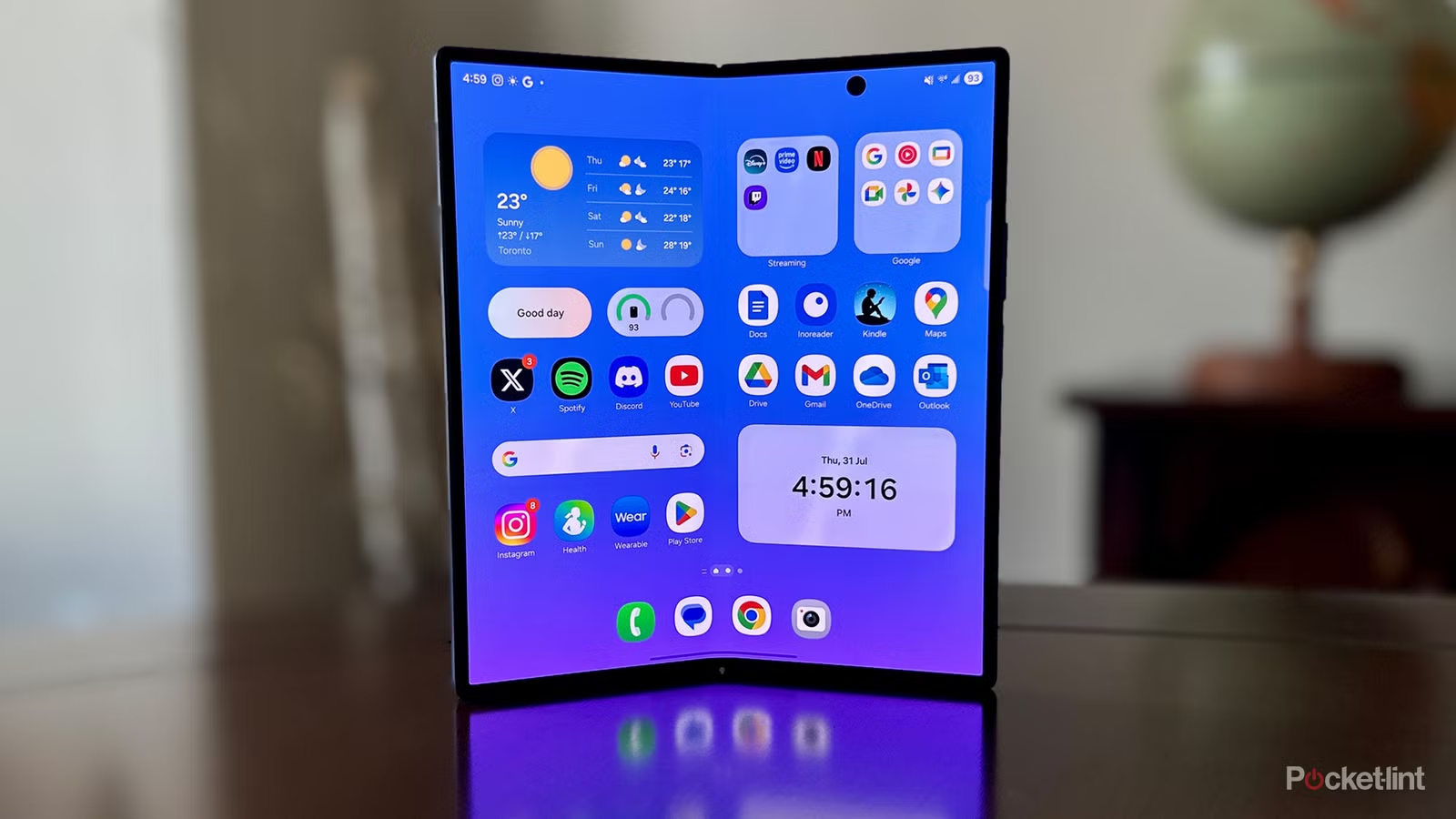
The Samsung Galaxy Z Fold 7 sits at the top of almost every best foldable phone list in 2026, and it earns that position. Samsung has refined every weakness that held earlier Fold models back, it’s now just 8.9mm thick when folded, weighs 215g, and carries a 7.82-inch inner display that feels closer to a tablet than any previous Fold generation.
Key Specs, Performance, and Who It’s Best For
| Spec | Detail |
|---|---|
| Thickness (folded) | 8.9mm |
| Weight | 215g |
| Main camera | 200MP |
| Processor | Snapdragon 8 Elite |
| Inner display | 7.82 inches |
| Software | One UI 8 on Android 16 |
| Software updates | 7 years guaranteed |
| Water resistance | IP48 |
| S Pen | Supported |
Performance is the Z Fold 7’s strongest suit. The Snapdragon 8 Elite handles demanding multitasking without breaking a sweat, you can run three apps side by side, stream video, and take notes with the S Pen simultaneously. The 200MP main camera rivals the Galaxy S25 Ultra in sharpness and low-light detail, which is rare for a foldable phone.
Samsung also reduced the crease visibility by using thicker, more rigid glass over the inner panel. It’s not invisible, but it’s noticeably less distracting than on the Z Fold 6.
Best for: Business users, Android power users, and anyone who wants the most complete foldable phone experience with long-term software support and global availability.
2. Google Pixel 10 Pro Fold – Best Foldable for AI Features and Camera Quality
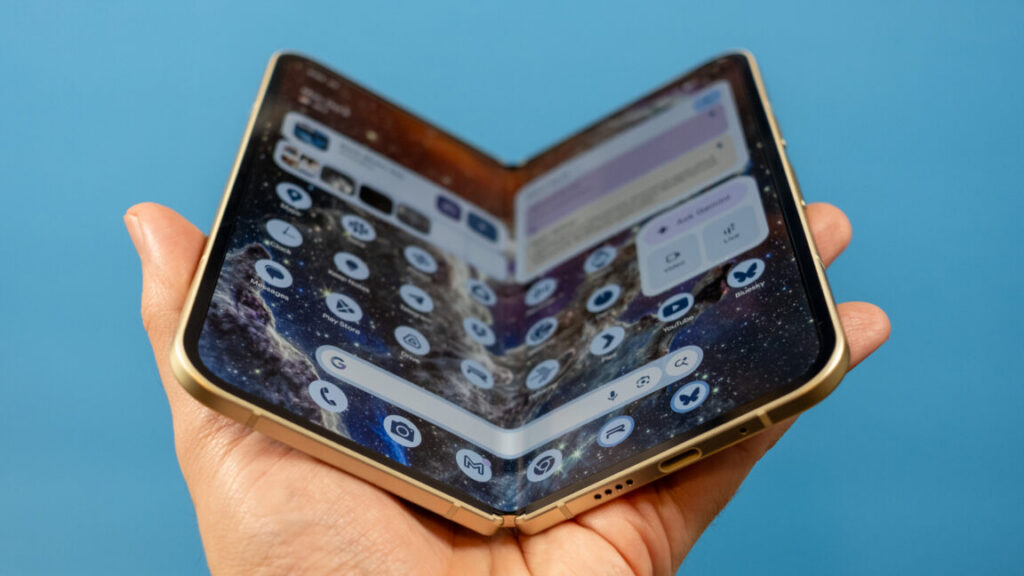
Google’s Pixel 10 Pro Fold is the best foldable phone if AI-driven features and point-and-shoot camera performance are your priorities. At 258g and 10.5mm folded, it’s heavier and thicker than the Z Fold 7, but Google compensates with software capabilities that no other foldable phone manufacturer can currently match.
Camera Capabilities and Google AI Integration
The Pixel 10 Pro Fold runs a triple-camera system backed by Pixelsnap computational photography. Google’s processing pipeline consistently produces accurate colors, sharp detail, and clean low-light shots with minimal effort from you.
Gemini AI is deeply embedded throughout the phone:
- Live Translate works in real time across calls and text
- Photo Unblur and Magic Eraser are accessible system-wide
- Gemini Live lets you ask contextual questions about what’s on your screen
- AI summarization works across Gmail, Docs, and Chrome
The gearless hinge is one of the smoothest on any foldable phone and contributes to a more refined opening and closing motion. IP68 protection makes it the most water-resistant book-style foldable phone in this roundup, suitable for rain, splashes, and short submersion.
Qi2 wireless charging support is a practical addition that most competitors still don’t include.
Best for: Pixel ecosystem users, photographers, and anyone who uses Google Workspace daily and wants AI features woven into every part of their phone.
3. Samsung Galaxy Z Flip 7 – Best Compact Foldable for Style and Portability
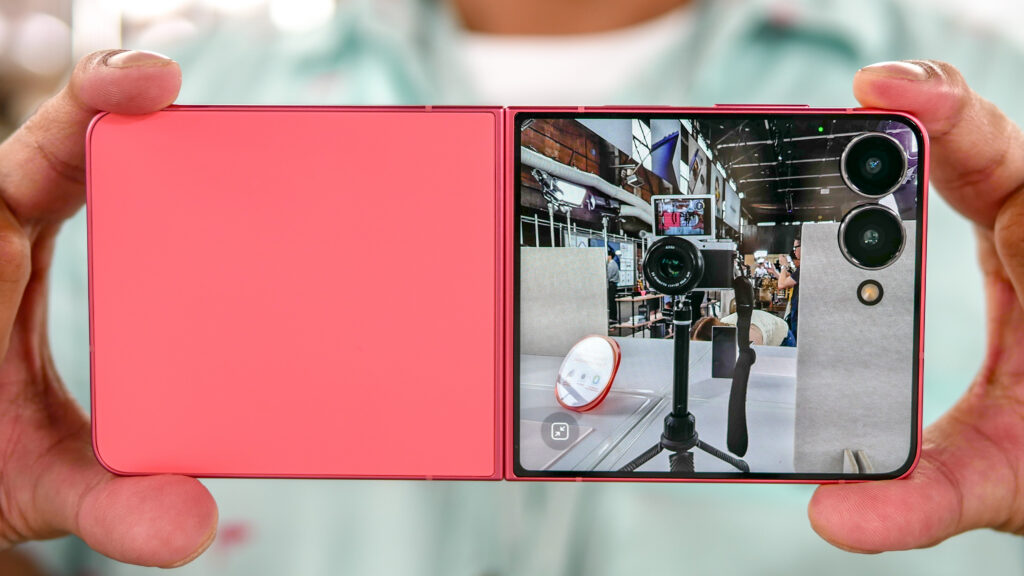
Not everyone needs a full tablet in their pocket. If portability and style matter more than screen real estate, the Samsung Galaxy Z Flip 7 is the best foldable phone in the flip category for most U.S. buyers.
The Z Flip 7 folds down to a palm-sized square that fits easily in a front pocket, a small purse, or a jacket pocket, something no book-style foldable phone can claim. When open, you get a full flagship-sized display with the same Snapdragon 8 Elite chip powering the Z Fold 7.
What makes the Z Flip 7 stand out:
- Large cover screen: The expanded Flex Window lets you reply to messages, check notifications, and even run select apps without opening the phone
- Flagship cameras: Samsung’s camera system on the Flip 7 is a genuine upgrade over budget phones, with strong portrait mode and night photography
- One UI 8 on Android 16: Seven years of software updates, same as the Z Fold 7
- Ecosystem integration: Works seamlessly with Galaxy Watch, Galaxy Buds, Samsung DeX, and Windows PCs via Link to Windows
Samsung’s ecosystem tools also make it easier to track your lost Android device remotely, lock it, or recover important data if the phone is misplaced.
| Feature | Z Flip 7 |
|---|---|
| Form factor | Flip/clamshell |
| Processor | Snapdragon 8 Elite |
| Software updates | 7 years |
| Cover screen | Large Flex Window |
| Best for | Style, portability, everyday carry |
Best for: Fashion-forward users, commuters, students, and anyone upgrading from a traditional smartphone who wants a best foldable phone experience without the bulk of a book-style device.
4. Motorola Razr Ultra 2025 – Best Flip Foldable for Cover Screen Experience
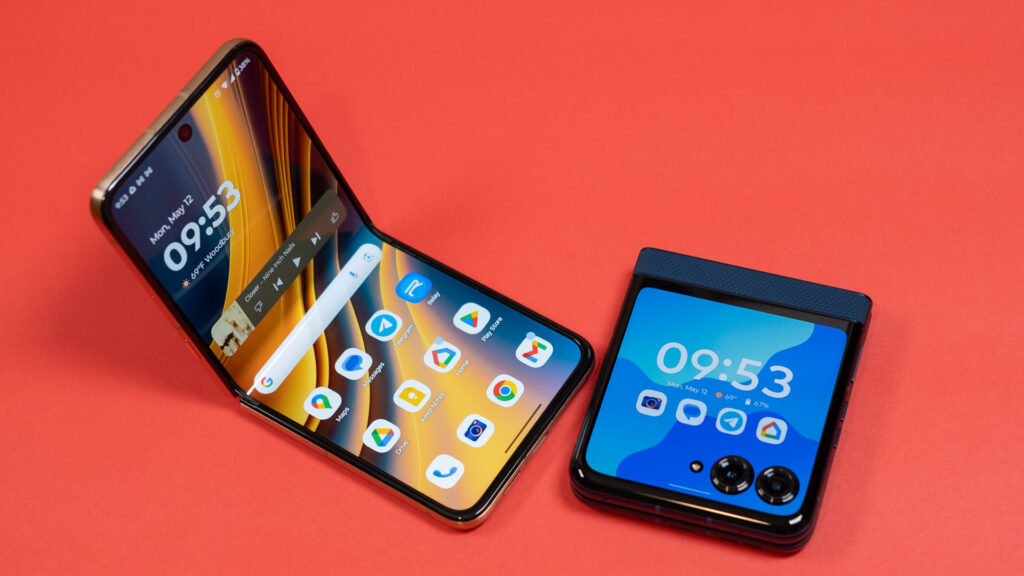
The Motorola Razr Ultra 2025 makes the strongest case for the flip foldable phone format purely on the strength of its cover screen. Motorola has given the Razr Ultra the largest and most functional external display of any flip foldable phone on the market, letting you handle most daily tasks without ever opening the device.
Key highlights:
- Weight: 199g unfolded, the lightest option among flip foldable phones in this list
- Thickness: Just 7.2mm folded, making it one of the slimmest foldable phones available
- Charging: 68W fast charging, which pushes a full charge in under an hour
- Display: Pantone-validated cover screen with accurate, vivid color reproduction
- AI: Moto AI integration handles tasks like smart replies, photo editing, and voice commands from the cover screen
The Razr Ultra’s cover screen isn’t just for glancing at notifications. You can respond to messages, control music, run navigation, take selfies, and interact with Moto AI, all without unfolding. This is a meaningful productivity feature that turns the flip format into something more than a style statement.
At 199g, it’s lighter than the Galaxy Z Flip 7, and the 68W charging means you spend less time tethered to a cable.
Best for: Users who want a compact foldable phone with a genuinely functional cover screen and fast charging, without sacrificing style or portability.
5. OnePlus Open 2 – Best Value Foldable for Power Users
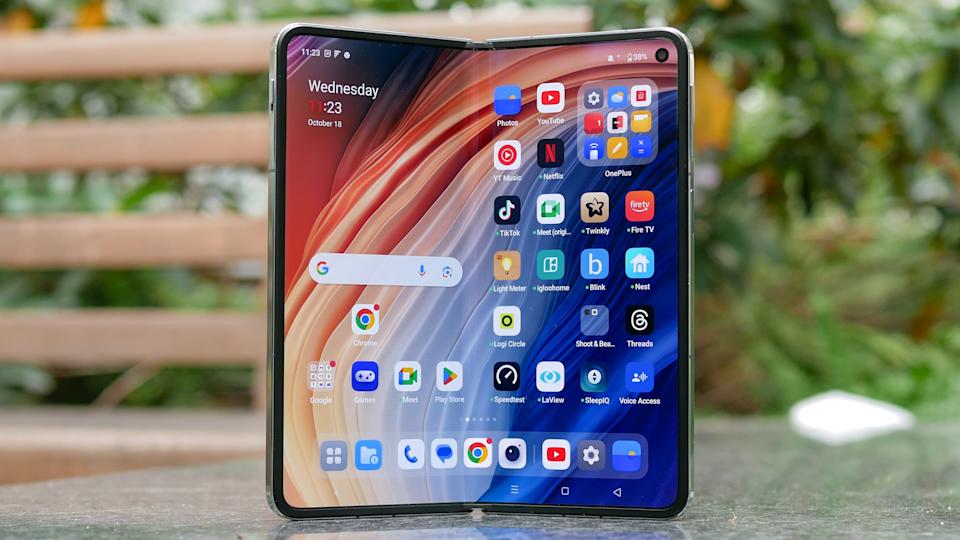
The OnePlus Open 2 is the best foldable phone if you want flagship-level specs without paying the full Samsung premium. At launch, it frequently receives significant discounts, often $200–$300 below comparable Samsung and Google models, making it one of the most accessible book-style foldable phones available.
Specs at a glance:
| Spec | Detail |
|---|---|
| Weight | 239–245g |
| Thickness | 11.7mm folded |
| Inner display | 7.82 inches |
| Cameras | Hasselblad-tuned triple system |
| Multitasking | Open Canvas |
The Hasselblad camera tuning is a genuine differentiator. Colors are natural and well-calibrated, and the camera app gives you granular manual controls that content creators and photography enthusiasts will appreciate. It’s not at the Pixel 10 Pro Fold’s level for AI-assisted photography, but it’s competitive with the Z Fold 7 in many scenarios.
Open Canvas is OnePlus’s multitasking interface, it lets you run apps in a continuous horizontal canvas rather than fixed split-screen windows. For power users who live in multiple apps at once, this feels more natural than Samsung’s traditional layout.
The trade-off is weight and thickness. At up to 245g and 11.7mm folded, the OnePlus Open 2 is noticeably bulkier than the Z Fold 7. If you carry your phone in a shirt pocket, that’s a real consideration.
Best for: Power users and value-seekers who want a capable book-style foldable phone with great cameras and a distinctive multitasking experience.
6. Oppo Find N5 – Best Foldable for Ultra-Slim Design and Crease-Free Display
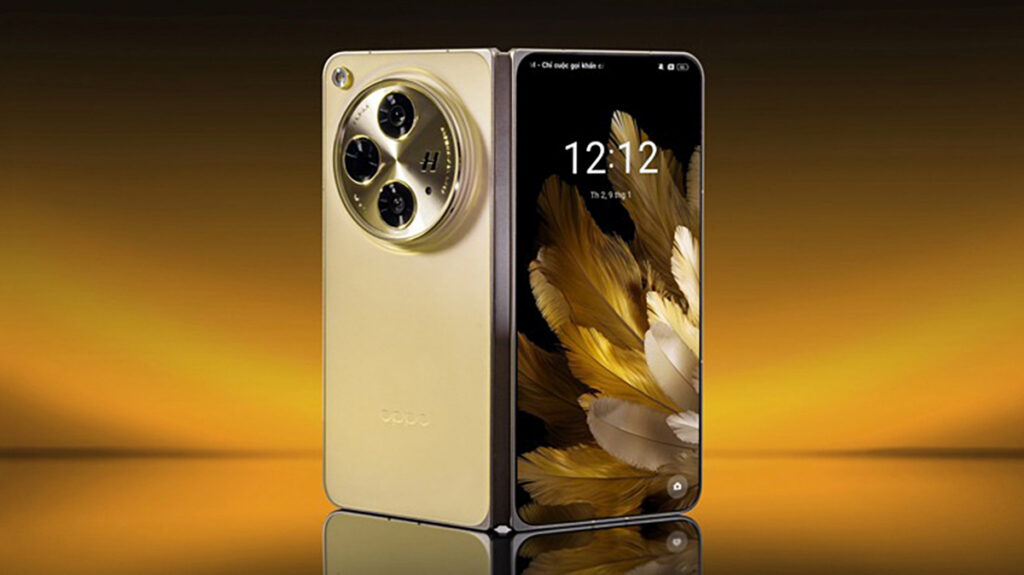
The Oppo Find N5 is an engineering achievement. It’s one of the thinnest book-style foldable phones ever made, and its inner display is the closest any manufacturer has come to eliminating the fold crease entirely. If physical design and display quality are your top priorities when buying a foldable phone, the Find N5 is in a class of its own.
What sets the Find N5 apart:
- Ultra-slim profile: Oppo has achieved a folded thickness that undercuts most competitors, making the Find N5 feel closer to a standard smartphone in hand
- Crease-free display: The inner panel uses an advanced hinge mechanism that keeps the flexible glass under consistent tension, dramatically reducing crease visibility
- Largest book-style screen: The inner display is among the biggest available on any foldable phone, giving you more usable space for reading, browsing, and multitasking
- Hardware quality: Build materials and hinge feel are exceptional, this is one of the most premium-feeling foldable phones you can hold
The significant caveat: the Oppo Find N5 has limited U.S. availability. You won’t find it in major U.S. carrier stores, and software support outside China is less consistent than Samsung or Google. Import options exist, but warranty and update support vary.
Best for: Design-focused buyers and import-market enthusiasts who prioritize physical form and display quality over software ecosystem support.
7. Huawei Mate X7 – Best Foldable for Display Innovation and Build Quality
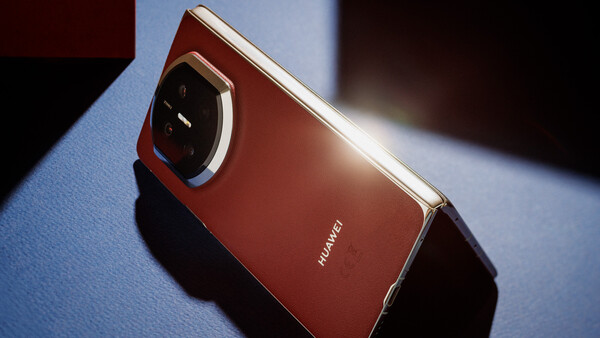
The Huawei Mate X7 rounds out this list as a foldable phone that pushes display technology and physical construction to their limits. Huawei’s engineering heritage in flexible displays is well established, the Mate series has historically introduced features that competitors later adopted, and the Mate X7 continues that pattern.
What the Mate X7 brings to the table:
- Display innovation: The Mate X7 uses Huawei’s latest flexible OLED panel technology, delivering exceptional brightness, color accuracy, and a refined fold crease compared to earlier Mate models
- Build quality: Huawei’s attention to materials and hinge construction gives the Mate X7 a premium, durable feel that matches or exceeds most competitors
- Design: Slim profile with refined aesthetics, consistent with Huawei’s design language across recent flagship devices
But, the Mate X7 comes with real-world limitations for U.S. buyers:
| Consideration | Detail |
|---|---|
| Google services | Not available |
| U.S. carrier support | Very limited |
| App ecosystem | Huawei AppGallery only |
| Global software updates | Inconsistent |
Huawei’s absence from Google’s ecosystem means no Gmail, Google Maps, YouTube, or Play Store. If you rely on Google services, and most U.S. users do, the Mate X7 is not a practical daily driver. It’s best viewed as a display and hardware showcase rather than a full-featured recommendation for the U.S. market.
Best for: Display technology enthusiasts and import buyers who don’t depend on Google services and want to experience Huawei’s latest engineering.
How to Choose the Right Foldable Phone: What Really Matters in 2026
Buying a foldable phone is a bigger decision than picking a standard smartphone. The price premium is real, and the wrong choice for your lifestyle can leave you with an expensive regret. Here’s what to actually weigh before you commit.
Form Factor: Book-Style vs. Flip
| Type | Best For | Examples |
|---|---|---|
| Book-style | Productivity, multitasking, content consumption | Z Fold 7, Pixel 10 Pro Fold, OnePlus Open 2 |
| Flip/clamshell | Portability, style, everyday carry | Z Flip 7, Razr Ultra 2025 |
Book-style foldable phones give you a tablet-sized inner display for split-screen productivity. Flip phones fold into a smaller form factor, better for pockets, not for spreadsheets.
Key Specs to Prioritize
- Weight: Under 220g is ideal for all-day carry. The Razr Ultra at 199g and the Z Fold 7 at 215g hit that target. The OnePlus Open 2 at 245g does not.
- Crease visibility: The Oppo Find N5 and Z Fold 7 lead here. Ask to see in-store demos before buying.
- Battery capacity: Look for 5,000mAh or more. Foldable displays drain power faster than standard screens.
- Camera system: If cameras matter, the Pixel 10 Pro Fold and Z Fold 7’s 200MP system are the benchmarks.
- Software updates: Seven-year guarantees from Samsung and Google make a strong long-term case.
- Hinge durability: IPX ratings matter. The Pixel 10 Pro Fold’s IP68 leads: Z Fold 7’s IP48 is solid for most real-world situations.
U.S. Buyer Considerations
For U.S. buyers, Samsung and Google offer the best combination of carrier support, warranty service, and long-term software updates. The Oppo Find N5 and Huawei Mate X7 are technically impressive foldable phones but come with practical limitations that most U.S. users shouldn’t overlook.
If you’re upgrading from a traditional smartphone, the Z Flip 7 or Razr Ultra 2025 is the lowest-friction entry into the best foldable phone category. If you’re a power user ready for a full productivity device, start with the Z Fold 7 or Pixel 10 Pro Fold.
Bottom line: The best foldable phone for you is the one that fits your actual daily habits, not just the one with the highest spec sheet. Match form factor to use case, confirm U.S. availability and support, and prioritize battery and hinge durability for long-term satisfaction.
Frequently Asked Questions About the Best Foldable Phones
What is the best foldable phones overall in 2026?
The Samsung Galaxy Z Fold 7 is the best overall foldable phone in 2026. It features an 8.9mm folded thickness, 215g weight, 7.82-inch inner display, Snapdragon 8 Elite processor, and a 200MP camera that rivals the Galaxy S25 Ultra. It supports the S Pen and offers seven years of software updates.
How do book-style and flip foldable phones differ?
Book-style foldables like the Z Fold 7 feature tablet-sized inner displays (7.82 inches) ideal for multitasking and productivity. Flip phones like the Z Flip 7 fold into pocket-sized squares for portability. Book-style is better for spreadsheets; flip is better for everyday carry and style.
Which foldable phone has the best AI features?
The Google Pixel 10 Pro Fold leads in AI capabilities with Gemini deeply integrated throughout. Features include Live Translate for real-time translation, Photo Unblur, Magic Eraser, and Gemini Live for contextual questions about screen content.
What is the lightest flip foldable phone available?
The Motorola Razr Ultra 2025 is the lightest flip foldable at 199g unfolded and just 7.2mm folded. It includes 68W fast charging that delivers a full charge in under an hour and features the largest functional cover screen on any flip phone.
How much crease visibility do modern foldable phones have?
Modern foldables significantly reduced crease visibility. The Samsung Z Fold 7 and Oppo Find N5 lead here using thicker, rigid glass and advanced hinge mechanisms. While not invisible, the crease is noticeably less distracting than older foldable generations.
What should U.S. buyers prioritize when choosing a foldable phone?
U.S. buyers should prioritize carrier support, warranty service, and long-term software updates. Samsung and Google offer seven-year guarantees and widespread availability. Consider weight (under 220g ideal), battery capacity (5,000mAh+), hinge durability (IP ratings), and crease visibility when selecting the best foldable phone for your needs.