A reliable humanoid robot workflow starts long before hardware takes its first step. Teams typically move through a clear sequence: build a physically accurate robot model, create a realistic simulation environment, train behaviors with AI, validate performance under varied conditions, and then transfer those capabilities onto the real machine. This process reduces risk, shortens iteration cycles, and exposes control, perception, and safety issues before they become expensive field problems. For humanoid systems, the workflow matters even more because balance, contact dynamics, sensing, and whole-body coordination interact constantly. A strong simulation-to-reality pipeline helps engineers improve locomotion, manipulation, and autonomous decision-making while keeping development measurable. The goal is not only to make a robot move in simulation, but to make it perform reliably in the physical world.
Step 1 – Build a Simulation-Ready Humanoid Robot Model
Create Accurate Robot Models with URDF and Physical Parameters
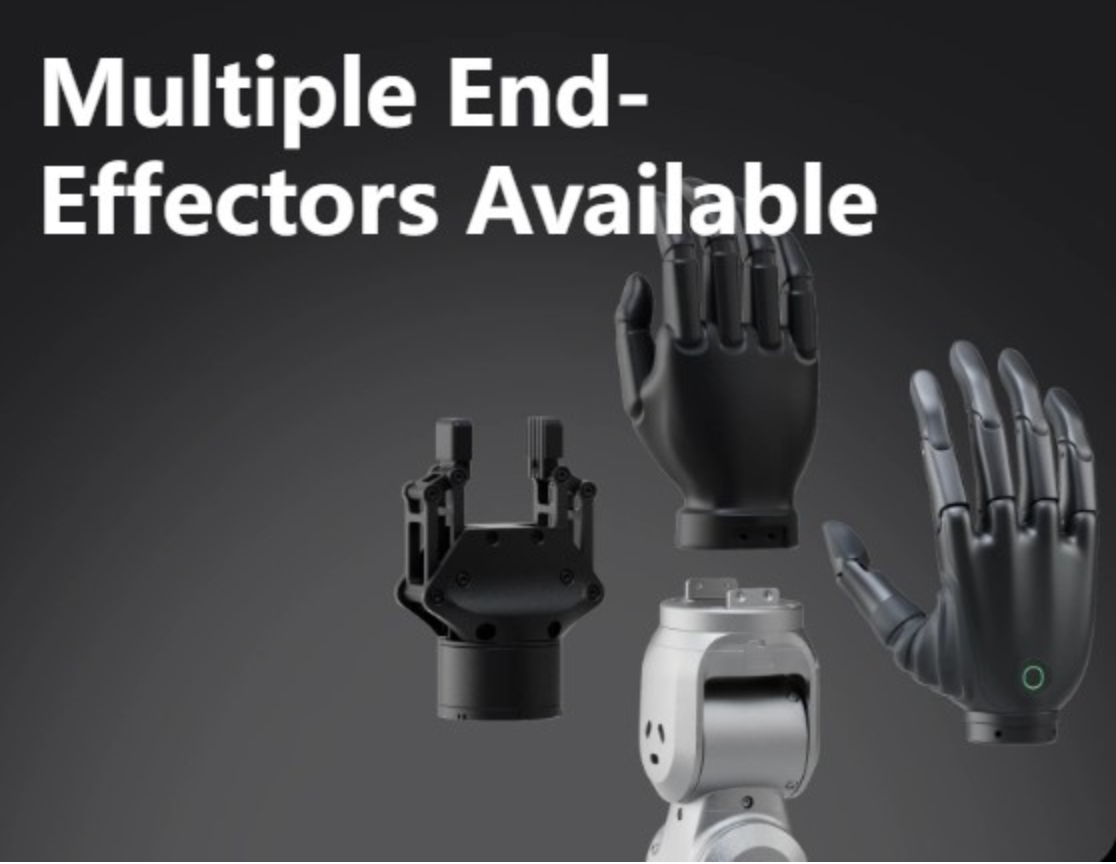
The first step is creating a simulation-ready humanoid model with a structured robot description, usually based on URDF, along with validated physical parameters. The model should include link geometry, joint hierarchy, joint limits, collision shapes, mass distribution, center of mass, inertia tensors, actuator definitions, and contact properties for feet, hands, and body surfaces. Accurate kinematics alone are not enough; stable locomotion and manipulation depend on realistic dynamics. Engineers should also define transmission behavior, control interfaces, and sensor mounting positions early, so later software integration remains consistent. If the robot will use external perception hardware or end effectors, those interfaces should appear in the model from the start. A good robot model becomes the common foundation for simulation, control development, testing, and deployment.
Configure Simulation Environments, Sensors, and Motion Constraints
Once the robot model is complete, the simulation environment must reflect the tasks the humanoid is expected to handle. That means building terrain, obstacles, stairs, furniture, graspable objects, lighting variation, and contact conditions that match real operating settings. Sensor simulation should include IMU data, depth perception, camera placement, latency, noise, and field-of-view limits, because control policies often fail when these details are ignored. Motion constraints also need explicit definition, including joint ranges, velocity limits, torque limits, foot contact assumptions, and self-collision rules. These constraints keep training grounded in what the physical robot can actually do. Domain randomization is also useful at this stage, introducing controlled variation in friction, mass, disturbances, and sensor noise so behaviors become more robust before transfer.
Step 2 – Train and Validate Robot Behaviors in Simulation
Develop Locomotion and Manipulation Policies Through AI Training
With the robot and environment prepared, teams can train behaviors for walking, balancing, recovery, reaching, grasping, and coordinated whole-body actions. Reinforcement learning is often used for locomotion and dynamic control, while imitation learning or supervised approaches can support manipulation and task sequencing. Reward design should stay tied to practical goals such as energy efficiency, foot stability, target tracking, collision avoidance, and successful object interaction. Curriculum learning helps by gradually increasing task difficulty instead of forcing the policy to solve every challenge at once. During training, engineers should monitor failure modes such as unstable gait transitions, poor contact timing, or overreliance on ideal sensor data. Strong policies emerge from repeated evaluation under varied conditions, not from success in a single optimized scenario.
Test Perception, Actions, and Task Performance in Virtual Environments
After training, the next job is validation. The robot should be tested across many virtual scenarios to confirm that perception, decision-making, and motion remain stable outside the training distribution. This includes walking over uneven ground, avoiding moving obstacles, reacting to pushes, identifying manipulable objects, and completing multi-step tasks under timing constraints. Perception modules must be checked for depth errors, occlusion, lighting variation, and sensor lag, because these factors directly affect action quality. Teams should also measure task success rate, recovery behavior, control smoothness, and computational load. Validation is where brittle policies are exposed and corrected. If the robot cannot maintain safe, repeatable performance in simulation under realistic disturbances, transferring to hardware simply moves unresolved problems into a more expensive environment.
Step 3 – Transfer the Trained Model to a Physical Humanoid Robot
Integrate AI Models with Robot Hardware, APIs, and Control Systems
Simulation results become useful only when the trained model is integrated cleanly with real hardware, low-level controllers, and software APIs. This stage requires mapping simulated observations and actions to actual sensors, actuators, middleware, and timing constraints. Engineers must align coordinate frames, actuator command formats, update rates, safety interlocks, fallback states, and state-estimation pipelines. Real robots also require tighter checks for thermal limits, communication latency, emergency stop behavior, and fault handling. AI inference may run on separate compute from motion control, so system architecture needs clear boundaries between perception, planning, and actuation. Hardware-in-the-loop testing helps verify that commands remain stable before full deployment. The transfer process works best when the simulation stack and onboard software share consistent interfaces rather than relying on ad hoc conversion layers.
Deploy and Validate Sim2Real Performance with LimX Oli
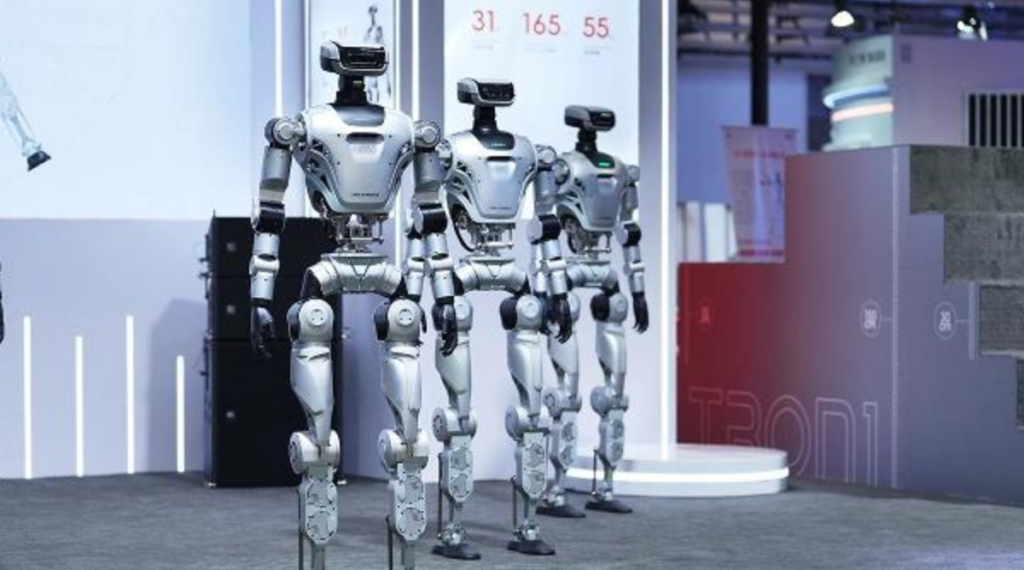
LimX Oli provides a practical platform for Sim2Real validation because its hardware supports both advanced control research and real-world integration. As a full size humanoid robot, Oli stands 165 cm tall and offers up to 31 DoF, enabling more human-like posture control and broader motion capability. It uses independent compute for motion control and perception, which helps separate low-level stability from higher-level AI workloads. For sensing, Oli includes a self-developed 6-axis IMU with improved anti-interference performance, plus head- and chest-mounted Intel® RealSense™ D435i depth cameras for navigation, manipulation, interaction, and obstacle avoidance. Extensive electrical interfaces and USB 3.0/3.2 support simplify external sensor expansion, including LiDAR and extra cameras, making deployment and real-world performance checks more efficient.
Conclusion
A successful humanoid robot workflow follows a disciplined path from digital model to physical performance. Start with an accurate robot description, realistic dynamics, and well-configured sensors. Train behaviors in simulation with objectives tied to real tasks, then validate them under disturbances, perception errors, and operational complexity. After that, focus on integration: software interfaces, onboard compute, controller timing, and safety must all match the assumptions made during development. Sim2Real success comes from reducing the gap at every stage rather than trying to solve it only at deployment. Platforms built for research and integration can speed that process by supporting richer sensing, flexible compute, and practical testing. When each step is handled carefully, simulation becomes more than a prototype tool; it becomes a reliable bridge to capable humanoid robot operation in the real world.