The video game companies leading 2026 control budgets larger than most Hollywood studios, employ hundreds of thousands of people, and shape how 3.4 billion players spend their free time. From Tencent’s 100+ studio portfolio to Nintendo’s Switch 2 sales topping 22 million units, the biggest names keep rewriting the rules of interactive entertainment.
We’ve ranked the nine most influential video game companies based on revenue, market reach, IP strength, and hiring activity. Whether you’re a gamer tracking your favorite publisher, a developer eyeing your next role, or an investor watching the sector, this list breaks down who’s winning, why, and what they’re building next. Below is a quick snapshot before we get into the details.
1. Tencent: The Global Gaming Powerhouse from China

Tencent sits at the top of every list of video game companies for a reason. Headquartered in Shenzhen, the company generated roughly $25 billion in gaming revenue in 2025, making it the largest gaming firm on Earth. Its strategy is simple but aggressive: shift from minority stakes to majority or controlling interests in studios across Europe, North America, and Asia to offset slowing domestic growth and lock in IP rights before Microsoft or Sony can.
Tencent owns Riot Games (League of Legends), Supercell (Clash of Clans), and significant stakes in Epic Games, FromSoftware, and Ubisoft. Mobile blockbusters like Honor of Kings and PUBG Mobile pull in billions annually, while PC and console expansion accelerates through Level Infinite, its global publishing arm.
Key Studios and Investments
Tencent’s portfolio exceeds 100 studios. Internal group TiMi Studio Group built Honor of Kings: Level Infinite, launched in 2021, manages 20 studios and published Black Myth: Wukong globally, handling localization, marketing, and platform deals with Steam, Sony, and Microsoft. In 2021 alone, Tencent closed 51 deals, including investments in Fatshark, Bohemia Interactive, Dontnod, and Klei. Venture Lab, led globally by Juno Shin, supports early-stage studios with funding, R&D, and data science. Focus areas: AAA PC/console titles, anime-style games, and female-oriented content.
2. Sony Interactive Entertainment: The Force Behind PlayStation
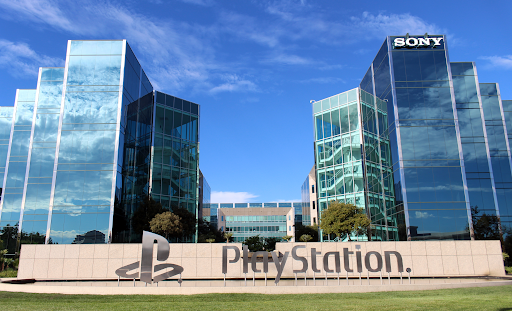
Sony Interactive Entertainment (SIE) runs the PlayStation ecosystem, which crossed 65 million PS5 units sold by early 2026. The division pulled in over $29 billion in fiscal 2025, anchoring Sony’s broader entertainment empire. Among video game companies, SIE leads on cinematic single-player experiences and exclusive IP that drives hardware sales.
The PlayStation hardware lineup continues to evolve with performance-focused upgrades like the Sony PlayStation 5 Pro, designed to deliver enhanced graphics, improved frame rates, and better support for advanced technologies like ray tracing and 4K/8K output. This mid-cycle refresh strengthens Sony’s position among high-end console gamers and keeps the PlayStation ecosystem competitive against rivals.
The PlayStation Plus service now exceeds 118 million subscribers across three tiers, and live-service bets like Helldivers 2 have shifted Sony’s strategy toward repeatable revenue.
First-Party Studios Like Naughty Dog and Santa Monica Studio
PlayStation Studios includes 19 first-party teams. Highlights:
| Studio | Notable Franchise | Location |
|---|---|---|
| Naughty Dog | The Last of Us, Uncharted | Santa Monica, CA |
| Santa Monica Studio | God of War | Los Angeles, CA |
| Insomniac Games | Marvel’s Spider-Man, Ratchet & Clank | Burbank, CA |
| Guerrilla Games | Horizon | Amsterdam, NL |
| Bungie | Destiny, Marathon | Bellevue, WA |
These studios share tech, talent, and motion-capture facilities, giving Sony a pipeline few competitors match.
3. Microsoft Gaming: Xbox, Activision Blizzard, and Cloud Dominance
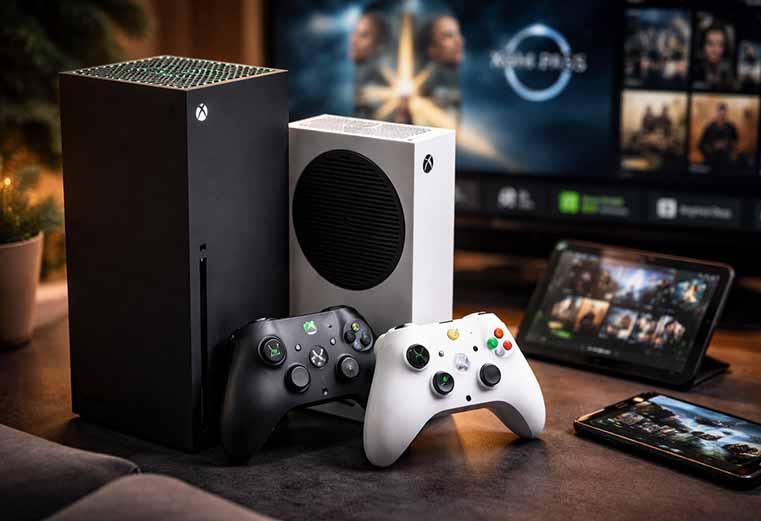
Microsoft Gaming became a true heavyweight after closing the $69 billion Activision Blizzard acquisition in October 2023. The deal added Call of Duty, World of Warcraft, Diablo, and Candy Crush to a roster already containing Halo, Forza, Minecraft, and the Bethesda catalog (Elder Scrolls, Fallout, Starfield).
Game Pass subscriptions sit near 38 million in 2026, and xCloud streams Xbox titles to phones, browsers, and smart TVs in 28 countries. Microsoft’s pitch among video game companies is platform-agnostic reach: play anywhere, on anything, for one monthly fee.
Key 2026 priorities include:
- Multiplatform releases (Sea of Thieves and Hi-Fi Rush already shipped on PS5 and Switch)
- AI-assisted development tools through Azure
- Expansion of cloud-native handhelds with partners like ASUS ROG Ally
Phil Spencer, CEO of Microsoft Gaming, has emphasized that the company measures success by total players reached rather than console units shipped, a notable break from the traditional console war model.
4. Nintendo: The Legacy Innovator Redefining Console Gaming
Nintendo launched the Switch 2 in June 2025, and it sold 22 million units in its first nine months, the fastest console launch in history. The Kyoto-based company holds the rare distinction among video game companies of competing on both hardware design and beloved IP without depending on third-party blockbusters.
Mario, Zelda, Pokémon, Animal Crossing, Splatoon, and Metroid generate consistent revenue across decades. The Pokémon brand alone, co-managed with The Pokémon Company, is the highest-grossing media franchise ever at over $147 billion lifetime.
Nintendo’s 2026 lineup includes:
- The Legend of Zelda: Echoes of the Sky (Switch 2 exclusive)
- A new mainline Pokémon title
- Continued Super Nintendo World theme park expansion in Orlando
- The Super Mario Galaxy animated film sequel
Unlike rivals, Nintendo avoids subscription-first models and chases hardware-driven hits. Its approach: fewer games, polished to a shine, sold at premium prices that rarely discount.
5. Electronic Arts (EA): The Sports and Live-Service Giant
Electronic Arts owns the sports gaming category. EA Sports FC (formerly FIFA), Madden NFL, NHL, and the resurrected College Football franchise generate the bulk of EA’s roughly $7.5 billion annual revenue. Ultimate Team modes alone bring in over $1.6 billion yearly through in-game purchases.
Beyond sports, EA’s catalog includes Apex Legends, The Sims, Battlefield, and the Star Wars Jedi series from Respawn Entertainment. Among video game companies focused on live-service longevity, EA stands out for keeping titles profitable five to ten years post-launch.
In September 2025, a consortium led by Saudi Arabia’s PIF, Silver Lake, and Affinity Partners announced a $55 billion take-private deal for EA, the largest leveraged buyout in history. The transaction, expected to close in 2026, will likely accelerate investment in mobile sports titles and reduce quarterly earnings pressure.
EA employs roughly 14,500 people across studios in Redwood City, Vancouver, Austin, and Stockholm.
6. Epic Games: Fortnite, Unreal Engine, and the Metaverse Push

Epic Games operates two businesses that would each rank among major video game companies on their own. Fortnite still pulls 230+ million monthly active users in 2026, fueled by collaborations with Marvel, LEGO, Disney, and music acts like Sabrina Carpenter and Eminem. The Fortnite ecosystem now includes LEGO Fortnite, Rocket Racing, and Fortnite Festival, plus user-generated islands built in Unreal Editor for Fortnite (UEFN).
Unreal Engine 5.5 powers a growing share of AAA development. Roughly 47% of in-development AAA titles use Unreal, including projects from CD Projekt Red, The Coalition, and Crystal Dynamics. The engine also runs film and TV virtual production for shows like The Mandalorian.
Disney invested $1.5 billion in Epic in 2024 to build a persistent games-and-entertainment universe linking Marvel, Star Wars, Pixar, and Avatar IP into Fortnite. Tim Sweeney, Epic’s founder, owns roughly 38.7% of the company: Tencent holds about 40%.
7. Take-Two Interactive: Home of Rockstar and 2K
Take-Two Interactive owns two of the most valuable studios in gaming: Rockstar Games and 2K. Rockstar’s Grand Theft Auto V has sold 215 million copies since 2013, and the long-awaited GTA VI is scheduled for fall 2026. Pre-launch analyst estimates project first-year revenue between $3 billion and $7 billion, potentially the largest entertainment release ever.
The 2K label runs NBA 2K, WWE 2K, BioShock, Borderlands, and Civilization. NBA 2K alone moves 8–10 million units yearly with strong recurrent spending through MyTeam.
| Label | Key Franchises | 2025 Revenue Share |
|---|---|---|
| Rockstar Games | GTA, Red Dead Redemption | ~45% |
| 2K | NBA 2K, Borderlands, Civilization | ~38% |
| Zynga (mobile) | Words With Friends, Empires & Puzzles | ~17% |
Take-Two’s $12.7 billion Zynga acquisition in 2022 gave it serious mobile reach, balancing the company against console-only video game companies.
8. Ubisoft: The Open-World Specialist with a Global Footprint
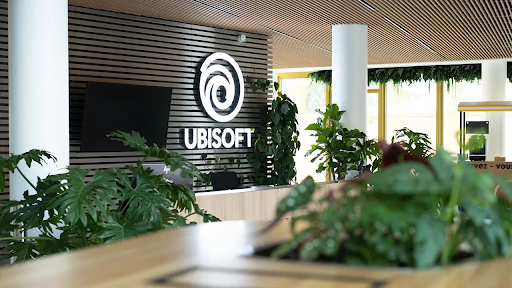
Ubisoft, headquartered in Montreuil, France, employs around 17,000 people across more than 40 studios in 30+ countries. The company specializes in large open-world games: Assassin’s Creed, Far Cry, Watch Dogs, The Division, and Rainbow Six Siege.
Assassin’s Creed Shadows, set in feudal Japan, shipped in March 2025 and crossed 5 million players in three weeks. Rainbow Six Siege X, a free-to-play relaunch in 2025, revived the tactical shooter and pushed it past 100 million registered players.
In early 2025, Ubisoft and Tencent created a new subsidiary valued at €4 billion to manage Assassin’s Creed, Far Cry, and Rainbow Six. Tencent invested €1.16 billion for a 25% stake. The move gave the Guillemot family more control while bringing in capital to fund delayed projects.
Ubisoft Connect, the company’s launcher, hosts cross-progression and a subscription tier (Ubisoft+) that bundles new releases day-one for $17.99 monthly.
Final Take
The biggest video game companies in 2026 share three traits: deep IP libraries, multiple revenue streams, and aggressive bets on cloud, mobile, and live-service models. Tencent leads on scale, Sony and Nintendo on exclusives, Microsoft on platform reach, and the rest fight for category leadership. For job seekers, all nine are actively hiring engineers, designers, and live-ops specialists. For players, expect bigger crossovers and more cross-platform releases.
Frequently Asked Questions About Video Game Companies
1. What is Tencent’s strategy for becoming the world’s largest video game company?
Ans. Tencent shifts from minority stakes to majority or controlling interests in studios globally, securing IP rights and offsetting slowing domestic growth. With 100+ studios, Level Infinite publishing arm, and TiMi Studio Group, it dominates through strategic investments across Europe, North America, and Asia while generating $25 billion in gaming revenue annually.
2. How do video game companies like Sony and Nintendo compete differently from Microsoft Gaming?
Ans. Sony focuses on exclusive first-party franchises and cinematic experiences driving PS5 hardware sales, while Nintendo prioritizes polished flagship IP rarely discounted. Microsoft emphasizes platform-agnostic reach via Game Pass and cloud streaming across devices, measuring success by total players rather than console units a different competitive model.
3. Which video game companies generate revenue from live-service games and subscriptions?
Ans. Sony (PlayStation Plus: 118+ million subscribers), Microsoft (Game Pass: 38 million), EA (Ultimate Team modes: $1.6 billion yearly), and Epic (Fortnite: 230+ million monthly active users) lead subscription and live-service revenue. These models provide recurring income compared to traditional single-game sales.
4. What makes Tencent’s Level Infinite different from other video game companies’ publishing arms?
Ans. Level Infinite, Tencent’s global publishing arm launched in 2021, manages 20 studios and handles localization, marketing, and platform deals with Steam, Sony, and Microsoft. It published Black Myth: Wukong globally and supports early-stage developers through Venture Lab, offering funding, R&D, and data science services while preserving creative independence.
5. What is the biggest financial challenge facing major video game companies right now?
Ans. Development costs are soaring AAA budgets routinely exceed $200 million. The 2024–2025 period saw 21,000+ industry layoffs as publishers prioritized profitability over headcount growth, forcing even major video game companies to balance ambitious projects with financial sustainability.
6. Which video game companies are expanding into anime-style and female-oriented games?
Ans. Tencent’s Venture Lab explicitly focuses on anime-style games and female-oriented content to expand market reach beyond traditional male gamers. This strategic focus helps video game companies tap emerging demographics and diversify revenue streams in high-end global markets.