
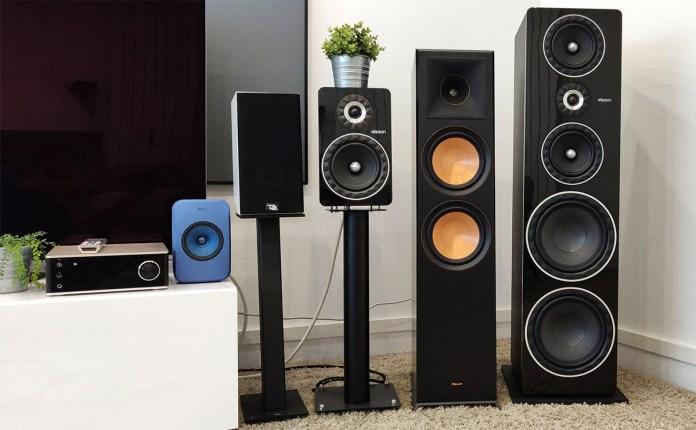
Shopping for stereo speakers gets confusing fast. Bookshelf or tower? Powered or passive? Do you really need a separate amp in 2026, or is a Wi-Fi pair enough?
Here’s the short answer: the right stereo speakers depend on your room size, your source gear, and how far you sit from the drivers. Everything else is detail.
Below are six types of stereo speakers worth your attention, what each one does well, and where each falls short. You’ll also get placement tips that make any pair sound better, often more than upgrading the speakers themselves.
1. Bookshelf Stereo Speakers: Big Sound From a Small Footprint
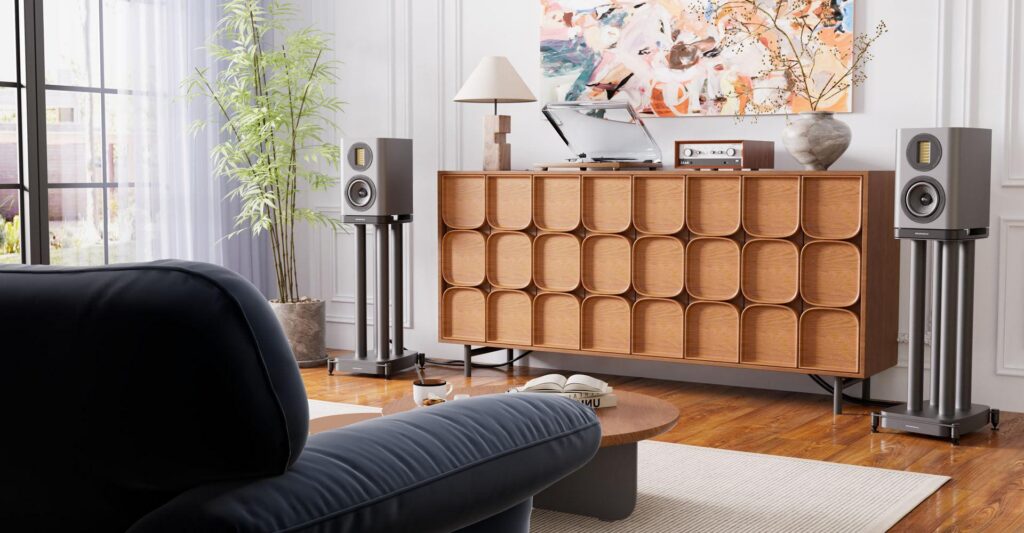
Bookshelf speakers are the default recommendation for most people, and for good reason. A typical pair uses a two-way design, a tweeter for highs plus a mid/bass driver, packed into a cabinet you can lift with one hand.
They’re built for small to medium rooms. Think a 10×12 bedroom, a home office, or one end of an open living space.
The irony? Bookshelf speakers rarely sound their best on an actual bookshelf. Cabinet resonance and boundary reinforcement muddy the low end. Put them on dedicated stands, pull them 8–12 inches off the back wall, and the difference is immediate, tighter bass, cleaner imaging.
Quick checks before you buy:
- Port location. Front-ported designs tolerate walls and shelving far better than rear-ported ones.
- Sensitivity rating. Anything below about 86 dB wants a beefier amp.
- Bass limits. Most compact cabinets roll off around 50–60 Hz. Add a small subwoofer if you want weight under that.
Best for: nearly everyone starting a stereo system.
2. Floorstanding Towers: Full-Range Power for Larger Rooms
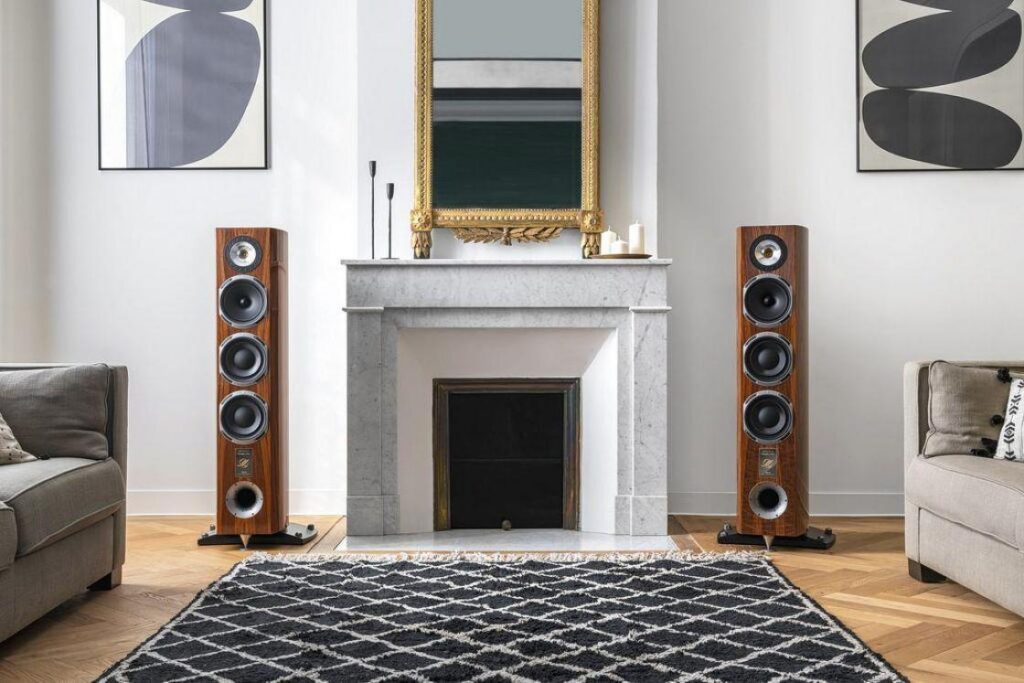
When a bookshelf pair runs out of gas, towers pick up the slack. Floorstanding stereo speakers use bigger cabinets and multiple drivers, often two or three woofers stacked below a tweeter, so they move more air and reach lower without help.
That matters in rooms over roughly 200 square feet, or anywhere you sit 10+ feet back. Towers also spread sound across a wider listening area, so the “sweet spot” isn’t a single chair.
The trade-offs are real, though:
| Upside | Downside |
|---|---|
| Deeper bass, no sub needed | Dominates a small room visually |
| Higher output before strain | Excites room modes more easily |
| Wider listening window | Costs more per pair |
One thing people underestimate: towers in a small room can sound worse than bookshelves. All that bass energy bounces around and turns boomy. Give them space, or step down a size.
Best for: living rooms, media rooms, and anyone who wants full-range sound from two boxes.
3. Powered (Active) Stereo Speakers: Amplification Built In
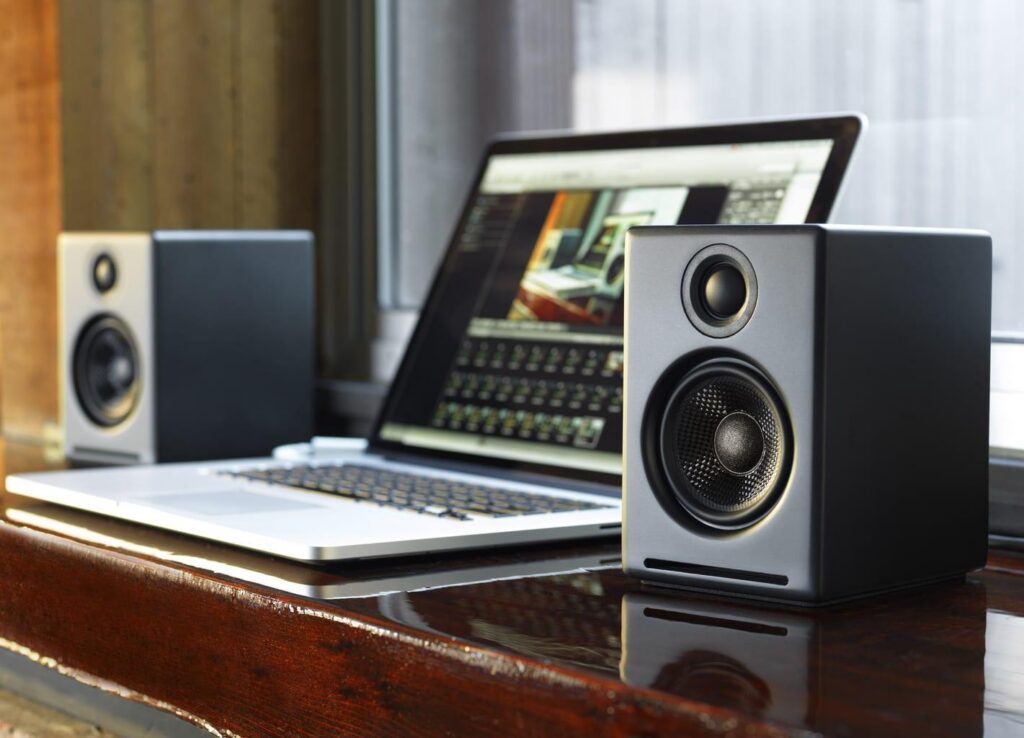
Powered stereo speakers, also called active speakers, have amplifiers inside the cabinet. One speaker plugs into the wall, the pair connects to each other, and you’re done. No receiver, no speaker wire gauge debates, no impedance matching.
There’s a technical advantage too. Because the amp is matched to the specific drivers, the designer controls the whole signal chain. Many active models use separate amps for the tweeter and woofer, with the crossover handled before amplification. That’s cleaner than splitting an already-amplified signal.
What you gain in simplicity, you give up in flexibility:
- You can’t upgrade the amp later, it’s baked in.
- If the internal electronics fail, repair is harder than swapping a receiver.
- Input options vary wildly. Check for the connections you need (RCA, optical, USB, HDMI ARC) before buying.
Most powered pairs include a built-in phono input or a subwoofer output these days, which covers turntables and bass extension in one shot.
Best for: desks, apartments, and anyone who wants great sound without a rack of gear.
4. Passive Speakers Paired With an Amp: The Classic Hi-Fi Route
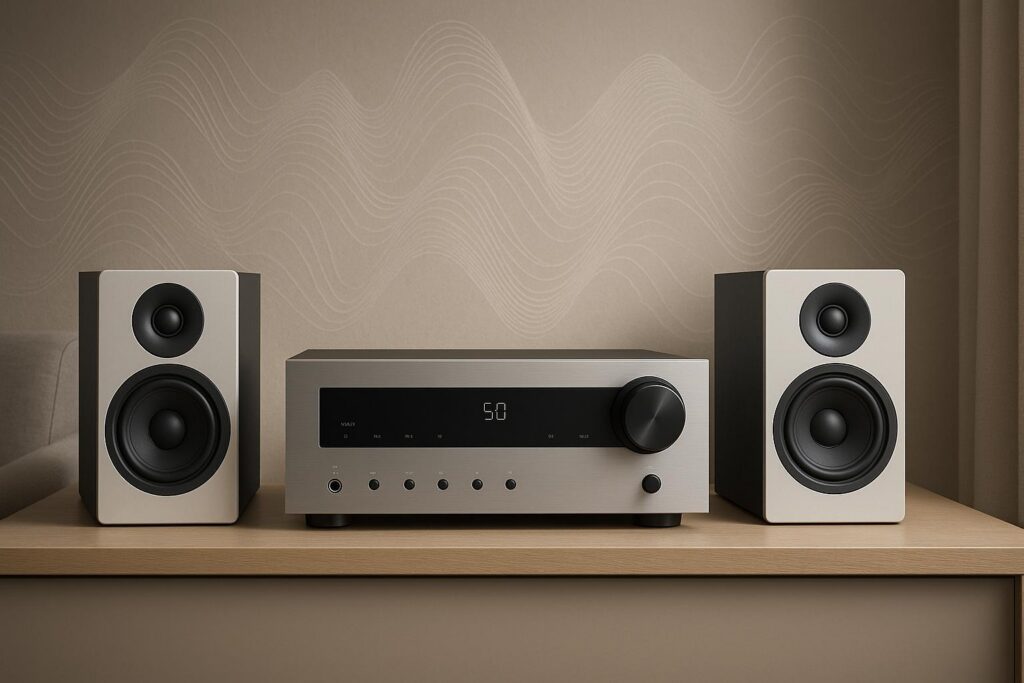
This is the setup audiophiles keep coming back to: passive stereo speakers plus a separate integrated amplifier or receiver. Speakers have no electronics inside besides a crossover. The amp does all the heavy lifting.
Why bother with two boxes and speaker cable? Control. You choose the amp character, the power output, and the source. Want to keep your speakers for 15 years and upgrade the amp twice? You can. Multiple review sources still recommend this route when sound quality is the priority.
Matching basics that actually matter:
- Aim for an amp that comfortably exceeds the speaker’s minimum power rating. Underpowering causes clipping, which kills tweeters faster than too much clean power.
- Check impedance, most passive speakers are 6 or 8 ohms, and most modern amps handle both.
- Budget split: roughly 60% speakers, 40% amp is a sane starting point.
Best for: listeners who want to build gradually, tinker, and squeeze out maximum fidelity per dollar.
5. Wireless and Streaming-Ready Stereo Pairs: Modern Convenience
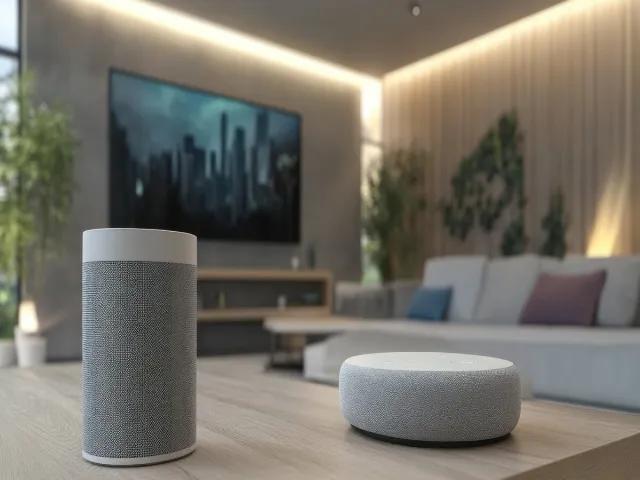
Wireless stereo speakers cut the clutter. Depending on the model, you get Bluetooth speakers, Wi-Fi, AirPlay, Chromecast, or a proprietary multiroom platform, and sometimes all of the above.
Wi-Fi generally beats Bluetooth for stereo listening. It carries higher bitrates, handles longer distances, and doesn’t drop out when you walk into the kitchen with your phone. Bluetooth is fine for casual use, but it compresses the signal.
Be honest about one thing: “wireless” almost never means no cables. Each speaker still needs power, and many pairs run a link cable between left and right. You’re removing one cable, not all of them.
Wired amp-based setups still edge out wireless on pure sound quality at the same price, because you’re not paying for radios, apps, and firmware. But the gap has narrowed a lot, and app-based room correction is a genuine perk.
Best for: streaming-first listeners, multiroom setups, and rooms where running speaker wire is a nonstarter.
6. Desktop and Near-Field Monitors: Precision Listening Up Close
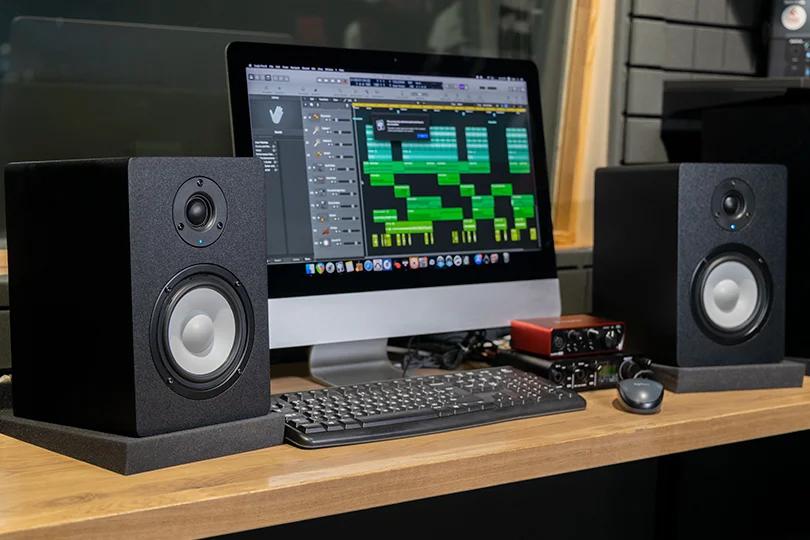
Near-field monitors are designed to be heard from two to four feet away. At that distance, you hear far more of the speaker and far less of the room, which is exactly why studios use them.
Most desktop stereo speakers in this category are compact, active, and tuned flat rather than boosted. Flat isn’t boring: it just means you hear the mix as recorded. Some people find it revealing, others find it unforgiving.
Positioning is non-negotiable here. Tweeters need to be at ear level, angled toward your head, forming a rough equilateral triangle with your listening position. Six inches off in height changes the treble noticeably.
Desk-specific fixes worth doing:
- Isolation pads or small stands stop the desk surface from acting as a resonator.
- Angle them up if they sit low, many stands add 15 degrees of tilt.
- Pull them forward off the wall behind your monitor to reduce reflections.
Best for: producers, gamers, and anyone working at a desk who wants detail over volume.
Placement and Setup Tips That Improve Any Stereo Pair
Good placement is the cheapest upgrade in audio. These rules apply whether you spent $200 or $5,000:
- Get tweeters to ear level when seated. This is the single biggest fix most people skip.
- Space them apart, then match the distance to your seat. Equal sides, roughly. Too close and the stereo image collapses: too far and there’s a hole in the middle.
- Toe them in slightly so they point at your head. Start with 10–15 degrees and adjust by ear.
- Keep them off walls and out of corners. Corners exaggerate bass and blur detail. Six to twelve inches of breathing room helps a lot.
- Use stands, not furniture. Solid, mass-loaded stands beat a bookshelf or TV console almost every time.
- Keep left and right symmetrical. One speaker in a corner and one in open space will never image correctly.
Spend twenty minutes moving speakers before you spend money replacing them.
Choosing the Right Stereo Speakers for Your Space
Start with your room, not the spec sheet. Small space and a desk? Near-field or powered bookshelf stereo speakers. Big living room? Towers, or bookshelves plus a subwoofer. Want to upgrade piece by piece over the years? Passive speakers and a good amp.
Then set them up properly. A well-placed budget pair will beat expensive speakers shoved against a wall, every single time.