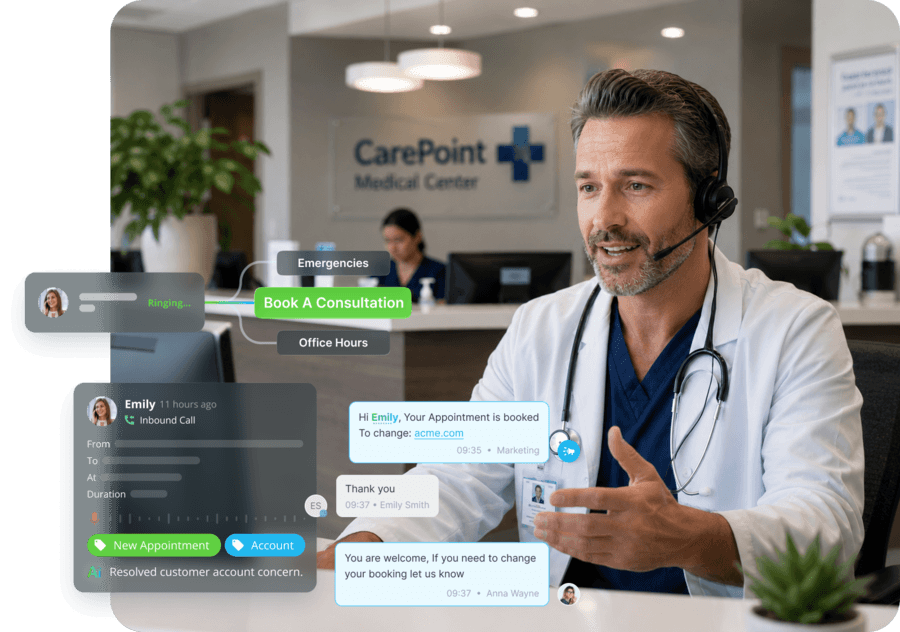
Getting in touch with a healthcare provider used to mean picking up the phone, waiting on hold, leaving a voicemail, and hoping someone called back before the end of the day. For patients trying to book an appointment, ask a simple question, or follow up on a treatment plan, that process could be frustratingly slow.
Technology is changing those expectations. People are now used to getting quick responses from banks, retailers, delivery services, and almost every other business they deal with. Healthcare is beginning to follow the same path, with tools such as online booking systems, text messaging, patient portals, and a healthcare AI chatbot making it easier for patients to get information without relying entirely on phone calls.
That does not mean replacing doctors, nurses, or reception staff with software. The biggest change is really about making communication simpler. Technology can handle routine interactions, while healthcare professionals spend more time dealing with questions that actually require human attention.
Booking Appointments Is Becoming More Convenient
For many patients, booking an appointment is the first interaction they have with a healthcare provider.
Traditionally, that could only happen during business hours. Someone might remember to make an appointment while commuting home, only to realise the clinic closed half an hour earlier.
Online scheduling gives patients more flexibility. They can check available times, request an appointment, or sometimes reschedule without having to call.
This can also reduce pressure on reception staff, who no longer need to manually handle every booking request.
The result is a small but meaningful improvement: patients have more control over when they organise their healthcare, while staff can focus on tasks that need more personal attention.
Text Messaging Is Replacing Some Phone Calls
Phone calls are still important, particularly when a conversation is sensitive or complicated. But not every interaction needs a phone call.
A short text message can be far more practical for things such as:
- Appointment reminders
- Confirmation requests
- Changes to opening hours
- Follow-up instructions
- Links to forms or paperwork
- Notifications that results are available
For patients, the advantage is convenience. A text can be read and answered in seconds without having to stop what they are doing.
Healthcare providers benefit too. Appointment reminders, for example, can help reduce missed visits by giving patients an easy way to confirm or reschedule.
Routine Questions Can Be Answered Faster
Healthcare practices receive plenty of questions that do not necessarily require a member of staff to answer them individually.
Patients might want to know whether a clinic accepts their insurance, when it closes, how to prepare for an appointment, or where they should park.
Digital communication tools can make that information available instantly.
This is particularly useful outside normal business hours. Someone researching a clinic at 9 pm might be able to find the answer immediately rather than remembering to call the following morning.
The key is knowing where automation should stop. Technology is well suited to straightforward administrative questions, but anything involving medical advice, urgent symptoms, or personal clinical decisions still requires appropriate professional involvement.
Patient Portals Are Putting More Information Within Reach
Another major shift has been the growth of patient portals.
Depending on the healthcare provider, patients may be able to log in and review test results, medication information, appointment history, invoices, or messages from their care team.
That can reduce the feeling of being disconnected from your own healthcare information.
Instead of keeping track of paperwork or waiting for someone to return a call, patients may have access to important details in one place.
It also makes it easier to prepare for appointments. A patient can review previous information beforehand and arrive with more specific questions.
Communication Is Becoming More Personalised
Technology can also help healthcare providers communicate with patients based on their individual circumstances.
Rather than sending the same message to everyone, practices can provide reminders or information related to a particular appointment, treatment, or stage